It's Patriots Day. You know the drill.
Paul Revere's Ride
LISTEN, my children, and you shall hear
Of the midnight ride of Paul Revere,
On the eighteenth of April, in Seventy-Five;
Hardly a man is now alive
Who remembers that famous day and year.
He said to his friend, "If the British march
By land or sea from the town to-night,
Hang a lantern aloft in the belfry arch
Of the North Church tower, as a signal light, --
One, if by land, and two, if by sea;
And I on the opposite shore will be,
Ready to ride and spread the alarm
Through every Middlesex village and farm,
For the country-folk to be up and to arm."
Then he said "Good-night!" and with muffled oar
Silently rowed to the Charlestown shore,
Just as the moon rose over the bay,
Where swinging wide at her moorings lay
The Somerset, British man-of-war;
A phantom ship, with each mast and spar
Across the moon like a prison-bar,
And a huge black hulk, that was magnified
By its own reflection in the tide.
Meanwhile, his friend, through alley and street
Wanders and watches with eager ears,
Till in the silence around him he hears
The muster of men at the barrack door,
The sound of arms, and the tramp of feet,
And the measured tread of the grenadiers,
Marching down to their boats on the shore.
Then he climbed the tower of the Old North Church,
By the wooden stairs, with stealthy tread,
To the belfry-chamber overhead,
And startled the pigeons from their perch
On the somber rafters, that round him made
Masses and moving shapes of shade, --
By the trembling ladder, steep and tall,
To the highest window in the wall,
Where he paused to listen and look down
A moment on the roofs of the town,
And the moonlight flowing over all.
Beneath, in the churchyard, lay the dead,
In their night-encampment on the hill,
Wrapped in silence so deep and still
That he could hear, like a sentinel's tread,
The watchful night-wind, as it went
Creeping along from tent to tent,
And seeming to whisper, "All is well!"
A moment only he feels the spell
Of the place and the hour, the secret dread
Of the lonely belfry and the dead;
For suddenly all his thoughts are bent
On a shadowy something far away,
Where the river widens to meet the bay, --
A line of black, that bends and floats
On the rising tide, like a bridge of boats.
Meanwhile, impatient to mount and ride,
Booted and spurred, with a heavy stride
On the opposite shore walked Paul Revere.
Now he patted his horse's side,
Now gazed on the landscape far and near,
Then, impetuous, stamped the earth,
And turned and tightened his saddle-girth;
But mostly he watched with eager search
The belfry-tower of the Old North Church,
As it rose above the graves on the hill,
Lonely and spectral and somber and still.
And lo! as he looks, on the belfry's height
A glimmer, and then a gleam of light!
He springs to the saddle, the bridle he turns,
But lingers and gazes, till full on his sight
A second lamp in the belfry burns!
A hurry of hoofs in a village street,
A shape in the moonlight, a bulk in the dark,
And beneath, from the pebbles, in passing, a spark
Struck out by a steed flying fearless and fleet:
That was all! And yet, through the gloom and the light,
The fate of a nation was riding that night;
And the spark struck out by that steed, in his flight,
Kindled the land into flame with its heat.
He has left the village and mounted the steep,
And beneath him, tranquil and broad and deep,
Is the Mystic, meeting the ocean tides;
And under the alders that skirt its edge,
Now soft on the sand, now loud on the ledge,
Is heard the tramp of his steed as he rides.
It was twelve by the village clock,
When he crossed the bridge into Medford town.
He heard the crowing of the cock,
And the barking of the farmer's dog,
And felt the damp of the river fog,
That rises after the sun goes down.
It was one by the village clock,
When he galloped into Lexington.
He saw the gilded weathercock
Swim in the moonlight as he passed,
And the meeting-house windows, blank and bare,
Gaze at him with a spectral glare,
As if they already stood aghast
At the bloody work they would look upon.
It was two by the village clock,
When he came to the bridge in Concord town.
He heard the bleating of the flock,
And the twitter of birds among the trees,
And felt the breath of the morning breeze
Blowing over the meadows brown.
And one was safe and asleep in his bed
Who at the bridge would be first to fall,
Who that day would be lying dead,
Pierced by a British musket-ball.
You know the rest. In the books you have read,
How the British regulars fired and fled, --
How the farmers gave them ball for ball,
From behind each fence and farm-yard wall,
Chasing the red-coats down the lane,
Then crossing the fields to emerge again
Under the trees at the turn of the road,
And only pausing to fire and load.
So through the night rode Paul Revere;
And so through the night went his cry of alarm
To every Middlesex village and farm, --
A cry of defiance and not of fear,
A voice in the darkness, a knock at the door,
And a word that shall echo forevermore!
For, borne on the night-wind of the Past,
Through all our history, to the last,
In the hour of darkness and peril and need,
The people will waken and listen to hear
The hurrying hoof-beat of that steed,
And the midnight-message of Paul Revere.
-Henry Wadsworth Longfellow
Enjoy the day!
Monday, April 20, 2009


Sunday, April 19, 2009
In Spring, this girl's heart goes a-pitter patter for a good patter song -
Advent of Spring
Under the beechful eye,
When causeless brandslings bring,
Let the froddering crooner cry,
And the braddled sapster sing.
For never and never again
Will the tottering bauble bray,
For bratticed wrackers are singing aloud,
And the throngers croon in May!
The wracking globe unstrung,
Unstrung in the frittering light
Of a moon that knows no day!
Of a day that knows no night!
Diving away in the crowd
Of sparkling frets of spray
The bratticed wrackers are singing aloud,
And the throngers croon in May!
Hasten, O hapful blue,
Blue of the thimmering brow,
Hasten to meet your crew,
Theyll clamour to pelt thee now!
For never again shall a cloud
Out-thribble the babbling day,
When bratticed wrackers are singing aloud,
And the throngers croon in May!
-W. S. Gilbert, from the Bab Ballads.
From what I've read so far in a book I picked up the other day, the Bab Ballads are considered to be Sullivan's major work. The edition that I have contains the full collection of songs accompanied by his wonderfully farfelu drawings. All of it is a bit redolent of Edward Lear.
Advent of Spring
Under the beechful eye,
When causeless brandslings bring,
Let the froddering crooner cry,
And the braddled sapster sing.
For never and never again
Will the tottering bauble bray,
For bratticed wrackers are singing aloud,
And the throngers croon in May!
The wracking globe unstrung,
Unstrung in the frittering light
Of a moon that knows no day!
Of a day that knows no night!
Diving away in the crowd
Of sparkling frets of spray
The bratticed wrackers are singing aloud,
And the throngers croon in May!
Hasten, O hapful blue,
Blue of the thimmering brow,
Hasten to meet your crew,
Theyll clamour to pelt thee now!
For never again shall a cloud
Out-thribble the babbling day,
When bratticed wrackers are singing aloud,
And the throngers croon in May!
-W. S. Gilbert, from the Bab Ballads.
From what I've read so far in a book I picked up the other day, the Bab Ballads are considered to be Sullivan's major work. The edition that I have contains the full collection of songs accompanied by his wonderfully farfelu drawings. All of it is a bit redolent of Edward Lear.
Saturday, April 18, 2009
Friday, April 17, 2009
There is no limit to how high our spirits can soar if we only allow them the freedom to do so.
To Althea From Prison
When Love with unconfined wings
Hovers within my gates,
And my divine Althea brings
To whisper at my grates;
When I lie tangled in her hair
And fettered with her eye,
The birds that wanton in the air
Know no such liberty.
When flowing cups pass swiftly round
With no allaying Thames,
Our careless heads with roses crowned,
Our hearts with loyal flames;
When thirsty grief in wine we steep,
When healths and draughts go free,
Fishes that tipple in the deep
Know no such liberty.
When, linnet-like confined,
With shriller throat shall sing
The mercy, sweetness, majesty
And glories of my King;
When I shall voice aloud how good
He is, how great should he,
Enlarge'd winds, that curl the flood,
Know no such liberty.
Stone walls do not a prison make,
Nor iron bars a cage;
Minds innocent and quiet take
That for an hermitage:
If I have freedom in my love,
And in my soul am free,
Angels alone, that soar above,
Enjoy such liberty.
- Colonel Richard Lovelace
To Althea From Prison
When Love with unconfined wings
Hovers within my gates,
And my divine Althea brings
To whisper at my grates;
When I lie tangled in her hair
And fettered with her eye,
The birds that wanton in the air
Know no such liberty.
When flowing cups pass swiftly round
With no allaying Thames,
Our careless heads with roses crowned,
Our hearts with loyal flames;
When thirsty grief in wine we steep,
When healths and draughts go free,
Fishes that tipple in the deep
Know no such liberty.
When, linnet-like confined,
With shriller throat shall sing
The mercy, sweetness, majesty
And glories of my King;
When I shall voice aloud how good
He is, how great should he,
Enlarge'd winds, that curl the flood,
Know no such liberty.
Stone walls do not a prison make,
Nor iron bars a cage;
Minds innocent and quiet take
That for an hermitage:
If I have freedom in my love,
And in my soul am free,
Angels alone, that soar above,
Enjoy such liberty.
- Colonel Richard Lovelace
Thursday, April 16, 2009
I don't know. Maybe it's that I've always felt myself more able to take care of myself after a rejection. Maybe it's the thought that I don't merit or maybe don't even want to deal with too much of another's ardor.
The More Loving One
Looking up at the stars, I know quite well
That, for all they care, I can go to hell,
But on earth indifference is the least
We have to dread from man or beast.
How should we like it were stars to burn
With a passion for us we could not return?
If equal affection cannot be,
Let the more loving one be me.
Admirer as I think I am
Of stars that do not give a damn,
I cannot, now I see them, say
I missed one terribly all day.
Were all stars to disappear or die,
I should learn to look at an empty sky
And feel its total dark sublime,
- W. H. Auden
The More Loving One
Looking up at the stars, I know quite well
That, for all they care, I can go to hell,
But on earth indifference is the least
We have to dread from man or beast.
How should we like it were stars to burn
With a passion for us we could not return?
If equal affection cannot be,
Let the more loving one be me.
Admirer as I think I am
Of stars that do not give a damn,
I cannot, now I see them, say
I missed one terribly all day.
Were all stars to disappear or die,
I should learn to look at an empty sky
And feel its total dark sublime,
- W. H. Auden
Wednesday, April 15, 2009
Instead of worrying about impending deadlines, have been spending way too much time among the Romans lately, revisiting Aeneas's exploits, and other events leading to the founding of the city which so influenced what we are today.
Have really been getting into reading history lately as, not only can you move about location-wise, you can jump from age to age. Talk about great escapes.
There is no frigate like a book
There is no Frigate like a Book
To take us Lands away,
Nor any Coursers like a Page
Of prancing Poetry –
This Traverse may the poorest take
Without oppress of Toll –
How frugal is the Chariot
That bears a Human soul.
-Emily Dickinson
Have really been getting into reading history lately as, not only can you move about location-wise, you can jump from age to age. Talk about great escapes.
There is no frigate like a book
There is no Frigate like a Book
To take us Lands away,
Nor any Coursers like a Page
Of prancing Poetry –
This Traverse may the poorest take
Without oppress of Toll –
How frugal is the Chariot
That bears a Human soul.
-Emily Dickinson
Tuesday, April 14, 2009
Dreams
Hold fast to dreams
For if dreams die
Life is a broken-winged bird
That cannot fly.
Hold fast to dreams
For when dreams go
Life is a barren field
Frozen with snow.
-Langston Hughes
(Am a bit overwhelmed; don't know how everything that needs to be done will be done. One, maybe two dreams are keeping me afloat right now.)
Hold fast to dreams
For if dreams die
Life is a broken-winged bird
That cannot fly.
Hold fast to dreams
For when dreams go
Life is a barren field
Frozen with snow.
-Langston Hughes
(Am a bit overwhelmed; don't know how everything that needs to be done will be done. One, maybe two dreams are keeping me afloat right now.)
Monday, April 13, 2009
Stood outside in the near freezing morning to admire my violas and pansies. Small, unassuming, but able to withstand an unexpected chill, they are weathering very nicely and infusing a not particularly charming place with a bit of much-needed cheer.
The Violet
Down in a green and shady bed
A modest violet grew;
Its stalk was bent, it hung its head,
As if to hide from view.
And yet it was a lovely flower,
Its colors bright and fair;
It might have graced a rosy bower,
Instead of hiding there.
Yet there it was content to bloom,
In modest tints arrayed;
And there diffused a sweet perfume,
Within the silent shade.
Then let me to the valley go,
This pretty flower to see;
That I may also learn to grow
In sweet humility.
-Jane Taylor
The Violet
Down in a green and shady bed
A modest violet grew;
Its stalk was bent, it hung its head,
As if to hide from view.
And yet it was a lovely flower,
Its colors bright and fair;
It might have graced a rosy bower,
Instead of hiding there.
Yet there it was content to bloom,
In modest tints arrayed;
And there diffused a sweet perfume,
Within the silent shade.
Then let me to the valley go,
This pretty flower to see;
That I may also learn to grow
In sweet humility.
-Jane Taylor
Sunday, April 12, 2009
Across the street at the hospital, I saw the first blooming cherry tree of the year. Brave thing to put its blossoms out on such a chilly day.
A Shropshire Lad, II
Loveliest of trees, the cherry now
Is hung with bloom along the bough,
And stands about the woodland ride
Wearing white for Eastertide.
Now, of my threescore years and ten,
Twenty will not come again,
And take from seventy springs a score,
It only leaves me fifty more.
And since to look at things in bloom
Fifty springs are little room,
About the woodlands I will go
To see the cherry hung with snow.
-A. E. Housman
(Happy Easter.)
***
Ralph Vaughan Williams set a number of Houseman's poems to music in his cycle On Wenlock Edge. Though the above is not included here, found this recording interesting for the historical context it gives.
A Shropshire Lad, II
Loveliest of trees, the cherry now
Is hung with bloom along the bough,
And stands about the woodland ride
Wearing white for Eastertide.
Now, of my threescore years and ten,
Twenty will not come again,
And take from seventy springs a score,
It only leaves me fifty more.
And since to look at things in bloom
Fifty springs are little room,
About the woodlands I will go
To see the cherry hung with snow.
-A. E. Housman
(Happy Easter.)
***
Ralph Vaughan Williams set a number of Houseman's poems to music in his cycle On Wenlock Edge. Though the above is not included here, found this recording interesting for the historical context it gives.
Saturday, April 11, 2009
Spring Cleaning.
Among other things, I did 12 loads of laundry. Am so looking to curling up in the crisp cotton sheets that make their appearance this time of year.
Ode to Ironing
Poetry is white:
it comes from the water covered with drops,
it wrinkles and piles up,
the skin of this planet must be stretched,
the sea of its whiteness must be ironed,
and the hands move and move,
the holy surfaces are smoothed out,
and that is how things are made:
hands make the world each day,
fire becomes one with steel,
linen, canvas, and cotton arrive
from the combat of the laundries,
and out of light a dove is born:
chastity returns from the foam.
-Pablo Neruda
translated by Stephen Mitchell
Among other things, I did 12 loads of laundry. Am so looking to curling up in the crisp cotton sheets that make their appearance this time of year.
Ode to Ironing
Poetry is white:
it comes from the water covered with drops,
it wrinkles and piles up,
the skin of this planet must be stretched,
the sea of its whiteness must be ironed,
and the hands move and move,
the holy surfaces are smoothed out,
and that is how things are made:
hands make the world each day,
fire becomes one with steel,
linen, canvas, and cotton arrive
from the combat of the laundries,
and out of light a dove is born:
chastity returns from the foam.
-Pablo Neruda
translated by Stephen Mitchell
Friday, April 10, 2009
At three minutes to midnight, I was desperate for a poem to post for today.
Poetry
it
takes
a lot of
desperation
dissatisfaction
and
disillusion
to
write
a
few
good
poems.
it's not
for
everybody
either to
write
it
or even to
read
it.
-Charles Bukowski
Poetry
it
takes
a lot of
desperation
dissatisfaction
and
disillusion
to
write
a
few
good
poems.
it's not
for
everybody
either to
write
it
or even to
read
it.
-Charles Bukowski
Thursday, April 09, 2009
Dusting needs to be done here a couple times a week due to our surfeit of cat dander, people dander, plaster dust (the house being a work in progress) and urban grit. Will probably have achieved some sort of enlightenment when I can be so graceful about this activity; it's easily my least favorite chore.
Dusting
Thank you for these tiny
particles of ocean salt,
pearl-necklace viruses,
winged protozoans:
for the infinite,
intricate shapes
of submicroscopic
living things.
For algae spores
and fungus spores,
bonded by vital
mutual genetic cooperation,
spreading their
inseparable lives
from equator to pole.
My hand, my arm,
make sweeping circles.
Dust climbs the ladder of light.
For this infernal, endless chore,
for these eternal seeds of rain:
Thank you. For dust.
-Marilyn Nelson
Dusting
Thank you for these tiny
particles of ocean salt,
pearl-necklace viruses,
winged protozoans:
for the infinite,
intricate shapes
of submicroscopic
living things.
For algae spores
and fungus spores,
bonded by vital
mutual genetic cooperation,
spreading their
inseparable lives
from equator to pole.
My hand, my arm,
make sweeping circles.
Dust climbs the ladder of light.
For this infernal, endless chore,
for these eternal seeds of rain:
Thank you. For dust.
-Marilyn Nelson
Wednesday, April 08, 2009
Though a lot of where I live is green and thriving, there are many places that are not. My walk to school brings me through a particularly blighted area, an area where the only green one might see is from the weeds pushing up through cracks or perhaps a sickly tree that put forth a few leaves. Gray and black is the dominant color scheme.
The soundscape is dominated by car horns and the roar of 18-wheelers.
Sometimes, however, I am surprised to hear a few cheerful notes from the sparrows who seem to be the only birds (aside from pigeons) hardy enough to manage this environment. The sight and sound of one one of these little fellows perched on a chain link fence either calling to a mate or marking territory does much to make the walk more bearable.
The Darkling Thrush
I leant upon a coppice gate
When Frost was spectre-gray,
And Winter's dregs made desolate
The weakening eye of day.
The tangled bine-stems scored the sky
Like strings of broken lyres,
And all mankind that haunted nigh
Had sought their household fires.
The land's sharp features seemed to be
The Century's corpse outleant,
His crypt the cloudy canopy,
The wind his death-lament.
The ancient pulse of germ and birth
Was shrunken hard and dry,
And every spirit upon earth
Seemed fervourless as I.
At once a voice arose among
The bleak twigs overhead
In a full-hearted evensong
Of joy illimited;
An aged thrush, frail, gaunt, and small,
In blast-beruffled plume,
Had chosen thus to fling his soul
Upon the growing gloom.
So little cause for carolings
Of such ecstatic sound
Was written on terrestrial things
Afar or nigh around,
That I could think there trembled through
His happy good-night air
Some blessed Hope, whereof he knew
And I was unaware.
-Thomas Hardy
The soundscape is dominated by car horns and the roar of 18-wheelers.
Sometimes, however, I am surprised to hear a few cheerful notes from the sparrows who seem to be the only birds (aside from pigeons) hardy enough to manage this environment. The sight and sound of one one of these little fellows perched on a chain link fence either calling to a mate or marking territory does much to make the walk more bearable.
The Darkling Thrush
I leant upon a coppice gate
When Frost was spectre-gray,
And Winter's dregs made desolate
The weakening eye of day.
The tangled bine-stems scored the sky
Like strings of broken lyres,
And all mankind that haunted nigh
Had sought their household fires.
The land's sharp features seemed to be
The Century's corpse outleant,
His crypt the cloudy canopy,
The wind his death-lament.
The ancient pulse of germ and birth
Was shrunken hard and dry,
And every spirit upon earth
Seemed fervourless as I.
At once a voice arose among
The bleak twigs overhead
In a full-hearted evensong
Of joy illimited;
An aged thrush, frail, gaunt, and small,
In blast-beruffled plume,
Had chosen thus to fling his soul
Upon the growing gloom.
So little cause for carolings
Of such ecstatic sound
Was written on terrestrial things
Afar or nigh around,
That I could think there trembled through
His happy good-night air
Some blessed Hope, whereof he knew
And I was unaware.
-Thomas Hardy
Tuesday, April 07, 2009
Tonight I'm knitting a mesh bag from recycled cotton to pass on to a lady in Atlanta as part of a group effort to promote sustainable living. (That sounds pretty Cambridge to me.)
the Cambridge ladies who live in furnished souls
the Cambridge ladies who live in furnished souls
are unbeautiful and have comfortable minds
(also, with the church's protestant blessings
daughters, unscented shapeless spirited)
they believe in Christ and Longfellow,both dead,
are invariably interested in so many things-
at the present writing one still finds
delighted fingers knitting for the is it Poles?
perhaps. While permanent faces coyly bandy
scandal of Mrs. N and Professor D
....the Cambridge ladies do not care,above
Cambridge if sometimes in its box of
sky lavender and cornerless, the
moon rattles like a fragment of angry candy
-e.e. cummings
the Cambridge ladies who live in furnished souls
the Cambridge ladies who live in furnished souls
are unbeautiful and have comfortable minds
(also, with the church's protestant blessings
daughters, unscented shapeless spirited)
they believe in Christ and Longfellow,both dead,
are invariably interested in so many things-
at the present writing one still finds
delighted fingers knitting for the is it Poles?
perhaps. While permanent faces coyly bandy
scandal of Mrs. N and Professor D
....the Cambridge ladies do not care,above
Cambridge if sometimes in its box of
sky lavender and cornerless, the
moon rattles like a fragment of angry candy
-e.e. cummings
Monday, April 06, 2009
While putting together yesterday's post, I got to read a fair bit about Elizabeth Barrett Browning. I knew that she married later on in life and I knew that her husband was younger than her, but had no idea about a lot of the details.
What strength of character and courage it must have taken for her to leave her family, to escape the clutches of her authoritarian father at a time when this just was not done. How wonderful that, at what was middle age then, she was able to live happily with her love, regain strength and start a family. Such perseverance, such patience on her part:
My Letters! all dead paper... (Sonnet 28)
My letters! all dead paper, mute and white!
And yet they seem alive and quivering
Against my tremulous hands which loose the string
And let them drop down on my knee tonight.
This said—he wished to have me in his sight
Once, as a friend: this fixed a day in spring
To come and touch my hand. . . a simple thing,
Yes I wept for it—this . . . the paper's light. . .
Said, Dear, I love thee; and I sank and quailed
As if God's future thundered on my past.
This said, I am thine—and so its ink has paled
With lying at my heart that beat too fast.
And this . . . 0 Love, thy words have ill availed
If, what this said, I dared repeat at last!
-Elizabeth Barrett Browning
And Robert's:
Meeting at Night
The gray sea and the long black land;
And the yellow half-moon large and low:
And the startled little waves that leap
In fiery ringlets from their sleep,
As I gain the cove with pushing prow,
And quench its speed i’ the slushy sand.
Then a mile of warm sea-scented beach;
Three fields to cross till a farm appears;
A tap at the pane, the quick sharp scratch
And blue spurt of a lighted match,
And a voice less loud, through joys and fears,
Than the two hearts beating each to each!
-Robert Browning
What strength of character and courage it must have taken for her to leave her family, to escape the clutches of her authoritarian father at a time when this just was not done. How wonderful that, at what was middle age then, she was able to live happily with her love, regain strength and start a family. Such perseverance, such patience on her part:
My Letters! all dead paper... (Sonnet 28)
My letters! all dead paper, mute and white!
And yet they seem alive and quivering
Against my tremulous hands which loose the string
And let them drop down on my knee tonight.
This said—he wished to have me in his sight
Once, as a friend: this fixed a day in spring
To come and touch my hand. . . a simple thing,
Yes I wept for it—this . . . the paper's light. . .
Said, Dear, I love thee; and I sank and quailed
As if God's future thundered on my past.
This said, I am thine—and so its ink has paled
With lying at my heart that beat too fast.
And this . . . 0 Love, thy words have ill availed
If, what this said, I dared repeat at last!
-Elizabeth Barrett Browning
And Robert's:
Meeting at Night
The gray sea and the long black land;
And the yellow half-moon large and low:
And the startled little waves that leap
In fiery ringlets from their sleep,
As I gain the cove with pushing prow,
And quench its speed i’ the slushy sand.
Then a mile of warm sea-scented beach;
Three fields to cross till a farm appears;
A tap at the pane, the quick sharp scratch
And blue spurt of a lighted match,
And a voice less loud, through joys and fears,
Than the two hearts beating each to each!
-Robert Browning
Sunday, April 05, 2009
We're working on our bird songs now. So far, I only know a few: the robin, the cardinal, the jay, the sparrow, the titmouse, the chickadee.
This afternoon, was sitting out in the yard listening to the mad chatter and trying to isolate the individual songs. I think I got a few correct, anyway.
Closed my eyes for a bit and, while listening to the songs, got to thinking about Pan's flute. According to Edith Hamilton's Mythology, The satyr fell in love with a nymph called Syrinx. Terrified of him, she fled. Just as he was about to catch her, however, her sisters turned her into "a tuft of reeds." Not one to give up, Pan created a shepherd's flute from the reeds that Syrinx had become and beeswax.
A Musical Instrument
What was he doing, the great god Pan,
Down in the reeds by the river?
Spreading ruin and scattering ban,
Splashing and paddling with hoofs of a goat,
And breaking the golden lilies afloat
With the dragon-fly on the river.
He tore out a reed, the great god Pan,
From the deep cool bed of the river:
The limpid water turbidly ran,
And the broken lilies a-dying lay,
And the dragon-fly had fled away,
Ere he brought it out of the river.
High on the shore sat the great god Pan
While turbidly flowed the river;
And hacked and hewed as a great god can,
With his hard bleak steel at the patient reed,
Till there was not a sign of the leaf indeed
To prove it fresh from the river.
He cut it short, did the great god Pan,
(How tall it stood in the river!)
Then drew the pith, like the heart of a man,
Steadily from the outside ring,
And notched the poor dry empty thing
In holes, as he sat by the river.
'This is the way,' laughed the great god Pan
(Laughed while he sat by the river),
'The only way, since gods began
To make sweet music, they could succeed.'
Then, dropping his mouth to a hole in the reed,
He blew in power by the river.
-Elizabeth Barrett Browning
This afternoon, was sitting out in the yard listening to the mad chatter and trying to isolate the individual songs. I think I got a few correct, anyway.
Closed my eyes for a bit and, while listening to the songs, got to thinking about Pan's flute. According to Edith Hamilton's Mythology, The satyr fell in love with a nymph called Syrinx. Terrified of him, she fled. Just as he was about to catch her, however, her sisters turned her into "a tuft of reeds." Not one to give up, Pan created a shepherd's flute from the reeds that Syrinx had become and beeswax.
A Musical Instrument
What was he doing, the great god Pan,
Down in the reeds by the river?
Spreading ruin and scattering ban,
Splashing and paddling with hoofs of a goat,
And breaking the golden lilies afloat
With the dragon-fly on the river.
He tore out a reed, the great god Pan,
From the deep cool bed of the river:
The limpid water turbidly ran,
And the broken lilies a-dying lay,
And the dragon-fly had fled away,
Ere he brought it out of the river.
High on the shore sat the great god Pan
While turbidly flowed the river;
And hacked and hewed as a great god can,
With his hard bleak steel at the patient reed,
Till there was not a sign of the leaf indeed
To prove it fresh from the river.
He cut it short, did the great god Pan,
(How tall it stood in the river!)
Then drew the pith, like the heart of a man,
Steadily from the outside ring,
And notched the poor dry empty thing
In holes, as he sat by the river.
'This is the way,' laughed the great god Pan
(Laughed while he sat by the river),
'The only way, since gods began
To make sweet music, they could succeed.'
Then, dropping his mouth to a hole in the reed,
He blew in power by the river.
-Elizabeth Barrett Browning
Saturday, April 04, 2009
Lots of folks say that we don't actually get a Spring here in Massachusetts, that we go straight from Winter to Summer. I don't really agree with that. Granted, the indicators are bit more subtle here than where I grew up, but there's still a clear buffer between the two extremes. For example, there is a gradual change in the angle of light in addition to the lengthening of days. And the quality of the breeze that hits one's back - it goes from needle-like cold to soft and warm with a nice, green watery scent to it. Bird calls and behaviors change as they move from survival to reproductive mode. The ground goes from gray and crumbly to wet, dark and, eventually, studded with silvery-green spikes of new life.
It's all there if one just takes the time out to observe.
Spring is like a perhaps hand
III
Spring is like a perhaps hand
(which comes carefully
out of Nowhere)arranging
a window,into which people look(while
people stare
arranging and changing placing
carefully there a strange
thing and a known thing here)and
changing everything carefully
spring is like a perhaps
Hand in a window
(carefully to
and fro moving New and
Old things,while
people stare carefully
moving a perhaps
fraction of flower here placing
an inch of air there)and
without breaking anything.
-e.e. cummings
It's all there if one just takes the time out to observe.
Spring is like a perhaps hand
III
Spring is like a perhaps hand
(which comes carefully
out of Nowhere)arranging
a window,into which people look(while
people stare
arranging and changing placing
carefully there a strange
thing and a known thing here)and
changing everything carefully
spring is like a perhaps
Hand in a window
(carefully to
and fro moving New and
Old things,while
people stare carefully
moving a perhaps
fraction of flower here placing
an inch of air there)and
without breaking anything.
-e.e. cummings
Friday, April 03, 2009
Crossroads
The second half of my life will be black
to the white rind of the old and fading moon.
The second half of my life will be water
over the cracked floor of these desert years.
I will land on my feet this time,
knowing at least two languages and who
my friends are. I will dress for the
occasion, and my hair shall be
whatever color I please.
Everyone will go on celebrating the old
birthday, counting the years as usual,
but I will count myself new from this
inception, this imprint of my own desire.
The second half of my life will be swift,
past leaning fenceposts, a gravel shoulder,
asphalt tickets, the beckon of open road.
The second half of my life will be wide-eyed,
fingers shifting through fine sands,
arms loose at my sides, wandering feet.
There will be new dreams every night,
and the drapes will never be closed.
I will toss my string of keys into a deep
well and old letters into the grate.
The second half of my life will be ice
breaking up on the river, rain
soaking the fields, a hand
held out, a fire,
and smoke going
upward, always up.
-Joyce Sutphen
***
Happy Birthday Pavel, and happy start of your new life!
The second half of my life will be black
to the white rind of the old and fading moon.
The second half of my life will be water
over the cracked floor of these desert years.
I will land on my feet this time,
knowing at least two languages and who
my friends are. I will dress for the
occasion, and my hair shall be
whatever color I please.
Everyone will go on celebrating the old
birthday, counting the years as usual,
but I will count myself new from this
inception, this imprint of my own desire.
The second half of my life will be swift,
past leaning fenceposts, a gravel shoulder,
asphalt tickets, the beckon of open road.
The second half of my life will be wide-eyed,
fingers shifting through fine sands,
arms loose at my sides, wandering feet.
There will be new dreams every night,
and the drapes will never be closed.
I will toss my string of keys into a deep
well and old letters into the grate.
The second half of my life will be ice
breaking up on the river, rain
soaking the fields, a hand
held out, a fire,
and smoke going
upward, always up.
-Joyce Sutphen
***
Happy Birthday Pavel, and happy start of your new life!
Thursday, April 02, 2009
Realpolitik.
Have recently been reading about the confusing and awful period just after the French Revolution to about the Franco-Prussian War. It is here that we to see the birth of Communism, the second French Empire (under Napoleon III), the unification of Italy and, of course, the clashes between Austria and Prussia.
Political maneuverings and eventual communication breakdowns were abstractions to the leaders, moves on a chess board. Not so much for those charged with the dirty work, however.
The Crimean War is somewhat analogous to the American civil war largely in that it was a clash that pitted modern technology with classical (now outmoded) tactics. Missteps and miscommunications, mainly on the British side, resulted in harsh criticism and a series of reforms both in the military and in the nursing profession.
One particularly egregious miscommunication occurred during the Battle of Balaclava; the brave actions of the soldier executing their incorrect orders was immortalized by Alfred, Lord Tennyson:
The Charge of the Light Brigade
Half a league, half a league,
Half a league onward,
All in the valley of Death
Rode the six hundred.
'Forward the Light Brigade!
Charge for the guns!' he said:
Into the valley of Death
Rode the six hundred.
'Forward, the Light Brigade!'
Was there a man dismayed?
Not though the soldier knew
Some one had blundered:
Theirs not to make reply,
Theirs not to reason why,
Theirs but to do and die:
Into the valley of Death
Rode the six hundred.
Cannon to right of them,
Cannon to left of them
Cannon in front of them
Volleyed and thundered;
Stormed at with shot and shell,
Boldly they rode and well,
Into the jaws of Death,
Into the mouth of Hell
Rode the six hundred.
Flashed all their sabres bare,
Flashed as they turned in air
Sabring the gunners there,
Charging an army, while
All the world wondered:
Plunged in the battery-smoke
Right through the line they broke;
Cossack and Russian
Reeled from the sabre-stroke
Shattered and sundered.
Then they rode back, but not
Not the six hundred.
Cannon to right of them,
Cannon to left of them,
Cannon behind them
Volleyed and thundered;
Stormed at with shot and shell,
While horse and hero fell,
They that had fought so well
Came through the jaws of Death,
Back from the mouth of Hell,
All that was left of them,
Left of six hundred.
When can their glory fade?
O the wild charge they made!
All the world wondered.
Honour the charge they made!
Honour the Light Brigade,
Noble six hundred!
***
(A wax cylinder recording of Tennyson reciting his poem can be found here.)
Have recently been reading about the confusing and awful period just after the French Revolution to about the Franco-Prussian War. It is here that we to see the birth of Communism, the second French Empire (under Napoleon III), the unification of Italy and, of course, the clashes between Austria and Prussia.
Political maneuverings and eventual communication breakdowns were abstractions to the leaders, moves on a chess board. Not so much for those charged with the dirty work, however.
The Crimean War is somewhat analogous to the American civil war largely in that it was a clash that pitted modern technology with classical (now outmoded) tactics. Missteps and miscommunications, mainly on the British side, resulted in harsh criticism and a series of reforms both in the military and in the nursing profession.
One particularly egregious miscommunication occurred during the Battle of Balaclava; the brave actions of the soldier executing their incorrect orders was immortalized by Alfred, Lord Tennyson:
The Charge of the Light Brigade
Half a league, half a league,
Half a league onward,
All in the valley of Death
Rode the six hundred.
'Forward the Light Brigade!
Charge for the guns!' he said:
Into the valley of Death
Rode the six hundred.
'Forward, the Light Brigade!'
Was there a man dismayed?
Not though the soldier knew
Some one had blundered:
Theirs not to make reply,
Theirs not to reason why,
Theirs but to do and die:
Into the valley of Death
Rode the six hundred.
Cannon to right of them,
Cannon to left of them
Cannon in front of them
Volleyed and thundered;
Stormed at with shot and shell,
Boldly they rode and well,
Into the jaws of Death,
Into the mouth of Hell
Rode the six hundred.
Flashed all their sabres bare,
Flashed as they turned in air
Sabring the gunners there,
Charging an army, while
All the world wondered:
Plunged in the battery-smoke
Right through the line they broke;
Cossack and Russian
Reeled from the sabre-stroke
Shattered and sundered.
Then they rode back, but not
Not the six hundred.
Cannon to right of them,
Cannon to left of them,
Cannon behind them
Volleyed and thundered;
Stormed at with shot and shell,
While horse and hero fell,
They that had fought so well
Came through the jaws of Death,
Back from the mouth of Hell,
All that was left of them,
Left of six hundred.
When can their glory fade?
O the wild charge they made!
All the world wondered.
Honour the charge they made!
Honour the Light Brigade,
Noble six hundred!
***
(A wax cylinder recording of Tennyson reciting his poem can be found here.)
Wednesday, April 01, 2009
In some places, today is April Fool's Day. In other places, one celebrates with an April Fish. Given this, I thought that perhaps it would be good to start things off with a little something pertaining to fools as well as fish:
***
Fish Crier
I KNOW a Jew fish crier down on Maxwell Street with a voice like a north wind blowing over corn stubble in January.
He dangles herring before prospective customers evincing a joy identical with that of Pavlowa dancing.
His face is that of a man terribly glad to be selling fish, terribly glad that God made fish, and customers to whom he may call his wares, from a pushcart.
-Carl Sandburg, from Chicago Poems
***
Fish Crier
I KNOW a Jew fish crier down on Maxwell Street with a voice like a north wind blowing over corn stubble in January.
He dangles herring before prospective customers evincing a joy identical with that of Pavlowa dancing.
His face is that of a man terribly glad to be selling fish, terribly glad that God made fish, and customers to whom he may call his wares, from a pushcart.
-Carl Sandburg, from Chicago Poems
Tuesday, March 31, 2009
Wednesday, April 16, 2008
Today I dressed up. Not because I felt good, but just because I knew I had to make some sort of effort or not leave the house at all. Have been complimented quite a lot, but it's not really helping me. Just can't seem to get beyond the aches, pains and generally poor mood.
A Hand-Mirror
Hold it up sternly--see this it sends back, (who is it? is it you?)
Outside fair costume, within ashes and filth,
No more a flashing eye, no more a sonorous voice or springy step,
Now some slave's eye, voice, hands, step,
A drunkard's breath, unwholesome eater's face, venerealee's flesh,
Lungs rotting away piecemeal, stomach sour and cankerous,
Joints rheumatic, bowels clogged with abomination,
Blood circulating dark and poisonous streams,
Words babble, hearing and touch callous,
No brain, no heart left, no magnetism of sex;
Such from one look in this looking-glass ere you go hence,
Such a result so soon--and from such a beginning!
-Walt Whitman
A Hand-Mirror
Hold it up sternly--see this it sends back, (who is it? is it you?)
Outside fair costume, within ashes and filth,
No more a flashing eye, no more a sonorous voice or springy step,
Now some slave's eye, voice, hands, step,
A drunkard's breath, unwholesome eater's face, venerealee's flesh,
Lungs rotting away piecemeal, stomach sour and cankerous,
Joints rheumatic, bowels clogged with abomination,
Blood circulating dark and poisonous streams,
Words babble, hearing and touch callous,
No brain, no heart left, no magnetism of sex;
Such from one look in this looking-glass ere you go hence,
Such a result so soon--and from such a beginning!
-Walt Whitman
Tuesday, April 15, 2008
My life has been the poem I would have writ,
But I could not both live and utter it.
-Henry David Thoreau.
I often wonder about whether or not keeping up my journal is a fool's errand. Still, something keeps compelling me to continue.
But I could not both live and utter it.
-Henry David Thoreau.
I often wonder about whether or not keeping up my journal is a fool's errand. Still, something keeps compelling me to continue.
Monday, April 14, 2008
The Dance
In Breughel's great picture, The Kermess,
the dancers go round, they go round and
around, the squeal and the blare and the
tweedle of bagpipes, a bugle and fiddles
tipping their bellies, (round as the thick-
sided glasses whose wash they impound)
their hips and their bellies off balance
to turn them. Kicking and rolling about
the Fair Grounds, swinging their butts, those
shanks must be sound to bear up under such
rollicking measures, prance as they dance
in Breughel's great picture, The Kermess
-William Carlos Williams

In Breughel's great picture, The Kermess,
the dancers go round, they go round and
around, the squeal and the blare and the
tweedle of bagpipes, a bugle and fiddles
tipping their bellies, (round as the thick-
sided glasses whose wash they impound)
their hips and their bellies off balance
to turn them. Kicking and rolling about
the Fair Grounds, swinging their butts, those
shanks must be sound to bear up under such
rollicking measures, prance as they dance
in Breughel's great picture, The Kermess
-William Carlos Williams

Sunday, April 13, 2008
Then there is more expansive Emily.
THE BRAIN is wider than the sky,
For, put them side by side,
The one the other will include
With ease, and you beside.
The brain is deeper than the sea,
For, hold them, blue to blue,
The one the other will absorb,
As sponges, buckets do.
The brain is just the weight of God,
For, lift them, pound for pound,
And they will differ, if they do,
As syllable from sound.
-Emily Dickinson
THE BRAIN is wider than the sky,
For, put them side by side,
The one the other will include
With ease, and you beside.
The brain is deeper than the sea,
For, hold them, blue to blue,
The one the other will absorb,
As sponges, buckets do.
The brain is just the weight of God,
For, lift them, pound for pound,
And they will differ, if they do,
As syllable from sound.
-Emily Dickinson
Saturday, April 12, 2008
This is a side of Whitman I don't tend to think about much - the sorrowful one, the more introspective, and perhaps even slightly depressed one.
I Sit and Look Out
I sit and look out upon all the sorrows of the world, and upon all
oppression and shame;
I hear secret convulsive sobs from young men, at anguish with
themselves, remorseful after deeds done;
I see, in low life, the mother misused by her children, dying,
neglected, gaunt, desperate;
I see the wife misused by her husband--I see the treacherous seducer
of young women;
I mark the ranklings of jealousy and unrequited love, attempted to be
hid--I see these sights on the earth;
I see the workings of battle, pestilence, tyranny--I see martyrs and
prisoners;
I observe a famine at sea--I observe the sailors casting lots who
shall be kill'd, to preserve the lives of the rest;
I observe the slights and degradations cast by arrogant persons upon
laborers, the poor, and upon negroes, and the like;
All these--All the meanness and agony without end, I sitting, look
out upon,
See, hear, and am silent.
-Walt Whitman
He is very much in tune with Emily Dickinson here, I think.
I Sit and Look Out
I sit and look out upon all the sorrows of the world, and upon all
oppression and shame;
I hear secret convulsive sobs from young men, at anguish with
themselves, remorseful after deeds done;
I see, in low life, the mother misused by her children, dying,
neglected, gaunt, desperate;
I see the wife misused by her husband--I see the treacherous seducer
of young women;
I mark the ranklings of jealousy and unrequited love, attempted to be
hid--I see these sights on the earth;
I see the workings of battle, pestilence, tyranny--I see martyrs and
prisoners;
I observe a famine at sea--I observe the sailors casting lots who
shall be kill'd, to preserve the lives of the rest;
I observe the slights and degradations cast by arrogant persons upon
laborers, the poor, and upon negroes, and the like;
All these--All the meanness and agony without end, I sitting, look
out upon,
See, hear, and am silent.
-Walt Whitman
He is very much in tune with Emily Dickinson here, I think.
Friday, April 11, 2008
I guess I stand in good company when I say I want to blow this two-bit town and head for the hills.
A Letter
Dear brother, would you know the life,
Please God, that I would lead?
On the first wheels that quit this weary town
Over yon western bridges I would ride
And with a cheerful benison forsake
Each street and spire and roof incontinent.
Then would I seek where God might guide my steps,
Deep in a woodland tract, a sunny farm,
Amid the mountain counties, Hant, Franklin, Berks,
Where down the rock ravine a river roars,
Even from a brook, and where old woods
Not tamed and cleared cumber the ground
With their centennial wrecks.
Find me a slope where I can feel the sun
And mark the rising of the early stars.
There will I bring my books, - my household gods,
The reliquaries of my dead saint, and dwell
In the sweet odor of her memory.
Then in the uncouth solitude unlock
My stock of art, plant dials in the grass,
Hang in the air a bright thermometer
And aim a telescope at the inviolate sun.
-Ralph Waldo Emerson, Chardon Street, Boston, 1831
(In truth, I feel this way every Spring. Never Ever intended to stay here as long as I have.)
A Letter
Dear brother, would you know the life,
Please God, that I would lead?
On the first wheels that quit this weary town
Over yon western bridges I would ride
And with a cheerful benison forsake
Each street and spire and roof incontinent.
Then would I seek where God might guide my steps,
Deep in a woodland tract, a sunny farm,
Amid the mountain counties, Hant, Franklin, Berks,
Where down the rock ravine a river roars,
Even from a brook, and where old woods
Not tamed and cleared cumber the ground
With their centennial wrecks.
Find me a slope where I can feel the sun
And mark the rising of the early stars.
There will I bring my books, - my household gods,
The reliquaries of my dead saint, and dwell
In the sweet odor of her memory.
Then in the uncouth solitude unlock
My stock of art, plant dials in the grass,
Hang in the air a bright thermometer
And aim a telescope at the inviolate sun.
-Ralph Waldo Emerson, Chardon Street, Boston, 1831
(In truth, I feel this way every Spring. Never Ever intended to stay here as long as I have.)
Thursday, April 10, 2008
A lot of focus has been on the Free Tibet movement lately. One can argue the merits for or against, of course. In my opinion, anything that makes the Chinese government uncomfortable can't be all that bad.
What I found interesting was this bit in the news. It surprises me that it took China this long to start framing their abysmal treatment of the Uighurs in some sort of global terrorist threat context.
I don't have much faith that things will improve much for the Tibetans or any other groups marked for repression by China. I have even less for the Turkic people from the western lands, mainly because of their being largely followers of Islam.
Wake up!
Hey, poor Uyghur, wake up, you have slept long enough,
You have nothing, what is now at stake is your very life.
If you don’t rescue yourself from this death,
Ah, your end will be looming, your end will be looming.
Stand up! I said, raise up your head, no more slumber,
Behead your enemy, spill his blood!
If you don’t open your eyes and look around,
The end of your frustrated existence is certain.
Already, your body looks lifeless,
Is that why you are indifferent to death?
You remain unmoved by my calls,
Do you want to perish this way, without coming to your senses?
Open your eyes wide, look around,
Think well about your future,
If you let this one chance escape,
Tomorrow will be nothing but sorrow, nothing but sorrow.
My heart pities you, o my Uyghur,
My companion, my brother, my relative,
With a burning soul, I am calling out to you,
But your are not hearing me, what is going on?
One day will come, and you will regret,
That day you will understand the reason of my calls.
You will say “alas!”, but it will be too late,
Then you will realize what Uyghur (the poet) meant.
-Abduxaliq Uyghur, Turpan, 1921
Original translator: Unknown
© Retranslated by: Rahman & Waris A. Janbaz
Paris, August 21, 2004
Here's what it looks like in the original language (followed by a transliteration).
A tiny bit about the poet.
A bit about the Uighur people themselves.
Some on the Uighur detainees in limbo in Guantanamo Bay.
What I found interesting was this bit in the news. It surprises me that it took China this long to start framing their abysmal treatment of the Uighurs in some sort of global terrorist threat context.
I don't have much faith that things will improve much for the Tibetans or any other groups marked for repression by China. I have even less for the Turkic people from the western lands, mainly because of their being largely followers of Islam.
Wake up!
Hey, poor Uyghur, wake up, you have slept long enough,
You have nothing, what is now at stake is your very life.
If you don’t rescue yourself from this death,
Ah, your end will be looming, your end will be looming.
Stand up! I said, raise up your head, no more slumber,
Behead your enemy, spill his blood!
If you don’t open your eyes and look around,
The end of your frustrated existence is certain.
Already, your body looks lifeless,
Is that why you are indifferent to death?
You remain unmoved by my calls,
Do you want to perish this way, without coming to your senses?
Open your eyes wide, look around,
Think well about your future,
If you let this one chance escape,
Tomorrow will be nothing but sorrow, nothing but sorrow.
My heart pities you, o my Uyghur,
My companion, my brother, my relative,
With a burning soul, I am calling out to you,
But your are not hearing me, what is going on?
One day will come, and you will regret,
That day you will understand the reason of my calls.
You will say “alas!”, but it will be too late,
Then you will realize what Uyghur (the poet) meant.
-Abduxaliq Uyghur, Turpan, 1921
Original translator: Unknown
© Retranslated by: Rahman & Waris A. Janbaz
Paris, August 21, 2004
Here's what it looks like in the original language (followed by a transliteration).
A tiny bit about the poet.
A bit about the Uighur people themselves.
Some on the Uighur detainees in limbo in Guantanamo Bay.
Wednesday, April 09, 2008
8 Count
from my bed
I watch
3 birds
on a telephone
wire.
one flies
off.
then
another.
one is left,
then
it too
is gone.
my typewriter is
tombstone
still.
and I am
reduced to bird
watching.
just thought I'd
let you
know,
fucker.
-Charles Bukowski
from my bed
I watch
3 birds
on a telephone
wire.
one flies
off.
then
another.
one is left,
then
it too
is gone.
my typewriter is
tombstone
still.
and I am
reduced to bird
watching.
just thought I'd
let you
know,
fucker.
-Charles Bukowski
Tuesday, April 08, 2008
I know things are getting bad when I start losing concentration. When things like the phone ringing, emails or even people asking me how my day is going start making my head spin in a fit of rage. Relationships during the brighter periods become entanglements I need to extricate myself from. Sleep becomes an obsession.
It becomes apparent in my writing when the prose becomes dull or flat. When I speak, I screw up word order and often substitute one homophone for another. Eventually, I'll have a hard time reminding myself to pay bills, wash, even eat.
I've crashed pretty badly four times in my life, the last being two years back at around this time. It was maybe 1/2 a year ago that I was convinced to try medicine. The stuff has had a pretty good effect thus far but I'm scared to death of it.
Having it Out with Melancholy
"If many remedies are prescribed for an illness, you may be certain that the illness has no cure."
-A P Chekhov, The Cherry Orchard
1 FROM THE NURSERY
When I was born, you waited
behind a pile of linen in the nursery,
and when we were alone, you lay down
on top of me, pressing
the bile of desolation into every pore.
And from that day on
everything under the sun and moon
made me sad -- even the yellow
wooden beads that slid and spun
along a spindle on my crib.
You taught me to exist without gratitude.
You ruined my manners toward God:
"We're here simply to wait for death;
the pleasures of earth are overrated."
I only appeared to belong to my mother,
to live among blocks and cotton undershirts
with snaps; among red tin lunch boxes
and report cards in ugly brown slipcases.
I was already yours -- the anti-urge,
the mutilator of souls.
2 BOTTLES
Elavil, Ludiomil, Doxepin,
Norpramin, Prozac, Lithium, Xanax,
Wellbutrin, Parnate, Nardil, Zoloft.
The coated ones smell sweet or have
no smell; the powdery ones smell
like the chemistry lab at school
that made me hold my breath.
3 SUGGESTION FROM A FRIEND
You wouldn't be so depressed
if you really believed in God.
4 OFTEN
Often I go to bed as soon after dinner
as seems adult
(I mean I try to wait for dark)
in order to push away
from the massive pain in sleep's
frail wicker coracle.
5 ONCE THERE WAS LIGHT
Once, in my early thirties, I saw
that I was a speck of light in the great
river of light that undulates through time.
I was floating with the whole
human family. We were all colors -- those
who are living now, those who have died,
those who are not yet born. For a few
moments I floated, completely calm,
and I no longer hated having to exist.
Like a crow who smells hot blood
you came flying to pull me out
of the glowing stream.
"I'll hold you up. I never let my dear
ones drown!" After that, I wept for days.
6 IN AND OUT
The dog searches until he finds me
upstairs, lies down with a clatter
of elbows, puts his head on my foot.
Sometimes the sound of his breathing
saves my life -- in and out, in
and out; a pause, a long sigh. . . .
7 PARDON
A piece of burned meat
wears my clothes, speaks
in my voice, dispatches obligations
haltingly, or not at all.
It is tired of trying
to be stouthearted, tired
beyond measure.
We move on to the monoamine
oxidase inhibitors. Day and night
I feel as if I had drunk six cups
of coffee, but the pain stops
abruptly. With the wonder
and bitterness of someone pardoned
for a crime she did not commit
I come back to marriage and friends,
to pink fringed hollyhocks; come back
to my desk, books, and chair.
8 CREDO
Pharmaceutical wonders are at work
but I believe only in this moment
of well-being. Unholy ghost,
you are certain to come again.
Coarse, mean, you'll put your feet
on the coffee table, lean back,
and turn me into someone who can't
take the trouble to speak; someone
who can't sleep, or who does nothing
but sleep; can't read, or call
for an appointment for help.
There is nothing I can do
against your coming.
When I awake, I am still with thee.
9 WOOD THRUSH
High on Nardil and June light
I wake at four,
waiting greedily for the first
note of the wood thrush. Easeful air
presses through the screen
with the wild, complex song
of the bird, and I am overcome
by ordinary contentment.
What hurt me so terribly
all my life until this moment?
How I love the small, swiftly
beating heart of the bird
singing in the great maples;
its bright, unequivocal eye.
-Jane Kenyon
***
This probably is the best description of the pain or lack of feeling and eventual rejeuvenation I've seen since Millay's Renascence. Actually, this might be better, as it addresses the cyclical nature of the sickness, the momentary well-being tempered by the ever-present fear of the slipping into that other awful, awful world. (I also love the image of the wood thrush in the last verse; it reminds me of the chickadee who brought me back to the world of the living years ago.)
I guess right now I feel myself slipping and am trying to figure out how to shore myself up. I have so much that needs to be done but am getting so tired again. The meds aren't meant to be a cure, I don't think. They just help the symptoms. The illness is something that needs to be lived with. I need to figure out how to either expand the good periods or reduce the depth/length of the bad periods. How, though?
It becomes apparent in my writing when the prose becomes dull or flat. When I speak, I screw up word order and often substitute one homophone for another. Eventually, I'll have a hard time reminding myself to pay bills, wash, even eat.
I've crashed pretty badly four times in my life, the last being two years back at around this time. It was maybe 1/2 a year ago that I was convinced to try medicine. The stuff has had a pretty good effect thus far but I'm scared to death of it.
Having it Out with Melancholy
"If many remedies are prescribed for an illness, you may be certain that the illness has no cure."
-A P Chekhov, The Cherry Orchard
1 FROM THE NURSERY
When I was born, you waited
behind a pile of linen in the nursery,
and when we were alone, you lay down
on top of me, pressing
the bile of desolation into every pore.
And from that day on
everything under the sun and moon
made me sad -- even the yellow
wooden beads that slid and spun
along a spindle on my crib.
You taught me to exist without gratitude.
You ruined my manners toward God:
"We're here simply to wait for death;
the pleasures of earth are overrated."
I only appeared to belong to my mother,
to live among blocks and cotton undershirts
with snaps; among red tin lunch boxes
and report cards in ugly brown slipcases.
I was already yours -- the anti-urge,
the mutilator of souls.
2 BOTTLES
Elavil, Ludiomil, Doxepin,
Norpramin, Prozac, Lithium, Xanax,
Wellbutrin, Parnate, Nardil, Zoloft.
The coated ones smell sweet or have
no smell; the powdery ones smell
like the chemistry lab at school
that made me hold my breath.
3 SUGGESTION FROM A FRIEND
You wouldn't be so depressed
if you really believed in God.
4 OFTEN
Often I go to bed as soon after dinner
as seems adult
(I mean I try to wait for dark)
in order to push away
from the massive pain in sleep's
frail wicker coracle.
5 ONCE THERE WAS LIGHT
Once, in my early thirties, I saw
that I was a speck of light in the great
river of light that undulates through time.
I was floating with the whole
human family. We were all colors -- those
who are living now, those who have died,
those who are not yet born. For a few
moments I floated, completely calm,
and I no longer hated having to exist.
Like a crow who smells hot blood
you came flying to pull me out
of the glowing stream.
"I'll hold you up. I never let my dear
ones drown!" After that, I wept for days.
6 IN AND OUT
The dog searches until he finds me
upstairs, lies down with a clatter
of elbows, puts his head on my foot.
Sometimes the sound of his breathing
saves my life -- in and out, in
and out; a pause, a long sigh. . . .
7 PARDON
A piece of burned meat
wears my clothes, speaks
in my voice, dispatches obligations
haltingly, or not at all.
It is tired of trying
to be stouthearted, tired
beyond measure.
We move on to the monoamine
oxidase inhibitors. Day and night
I feel as if I had drunk six cups
of coffee, but the pain stops
abruptly. With the wonder
and bitterness of someone pardoned
for a crime she did not commit
I come back to marriage and friends,
to pink fringed hollyhocks; come back
to my desk, books, and chair.
8 CREDO
Pharmaceutical wonders are at work
but I believe only in this moment
of well-being. Unholy ghost,
you are certain to come again.
Coarse, mean, you'll put your feet
on the coffee table, lean back,
and turn me into someone who can't
take the trouble to speak; someone
who can't sleep, or who does nothing
but sleep; can't read, or call
for an appointment for help.
There is nothing I can do
against your coming.
When I awake, I am still with thee.
9 WOOD THRUSH
High on Nardil and June light
I wake at four,
waiting greedily for the first
note of the wood thrush. Easeful air
presses through the screen
with the wild, complex song
of the bird, and I am overcome
by ordinary contentment.
What hurt me so terribly
all my life until this moment?
How I love the small, swiftly
beating heart of the bird
singing in the great maples;
its bright, unequivocal eye.
-Jane Kenyon
***
This probably is the best description of the pain or lack of feeling and eventual rejeuvenation I've seen since Millay's Renascence. Actually, this might be better, as it addresses the cyclical nature of the sickness, the momentary well-being tempered by the ever-present fear of the slipping into that other awful, awful world. (I also love the image of the wood thrush in the last verse; it reminds me of the chickadee who brought me back to the world of the living years ago.)
I guess right now I feel myself slipping and am trying to figure out how to shore myself up. I have so much that needs to be done but am getting so tired again. The meds aren't meant to be a cure, I don't think. They just help the symptoms. The illness is something that needs to be lived with. I need to figure out how to either expand the good periods or reduce the depth/length of the bad periods. How, though?
Monday, April 07, 2008
A resurrected post on the insights of a thoughtful friend:
I ended up with two classics. They may bore you because although I did search long, they were easy to find and not very original or different. I picked them because they speak of spring in a way that I have never considered. I found it actually fascinating that I had never thought this way or even read of men, or women for that matter, thinking of spring in a negative light because of jealousy or bitterness. And this is coming from a man who has never been accused of being overly optimistic.
The first is a passage from Love’s Labors Lost (Act V, Scene 2)
When daisies pied, and violets blue,
And lady-smocks all silver-white,
And cuckoo-buds of yellow hue
Do paint the me adows with delight,
The cuckoo then, on every tree,
Mocks married men, for thus sings he:
“Cuckoo!
Cuckoo, cuckoo!” O word of fear,
Unpleasing to a married ear.
When shepherds pipe on oaten straws,
And merry larks are plough men’s clocks,
When turtles tread, and rooks, and daws,
And maidens bleach their sum me r smocks,
The cuckoo then, on every tree,
Mocks married men, for thus sings he:
“Cuckoo!
Cuckoo, cuckoo!” O word of fear,
Unpleasing to a married ear.
The next is by Wordsworth. Again, he speaks of the beauty of spring but can’t take it for what it is. I’m not sure why these two struck me like they did. I’m going to have to think more on that. Once again, thank you for making me think.
Lines Written in Early Spring
I heard a thousand blended notes,
While in a grove I sate reclined,
In that sweet mood when pleasant thoughts
Bring sad thoughts to the mind.
To her fair works did Nature link
The human soul that through me ran;
And much it grieved my heart to think
What man has made of man.
Through primrose tufts, in that green bower,
The periwinkle trailed its wreaths;
And ’tis my faith that every flower
Enjoys the air it breathes.
The birds around me hopped and played,
Their thoughts I cannot me asure:--
But the least motion which they made
It see me d a thrill of pleasure.
The budding twigs spread out their fan,
To catch the breezy air;
And I must think, do all I can,
That there was pleasure there.
If this belief from heaven be sent,
If such be Nature’s holy plan,
Have I not reason to lament
What man has made of man?
***
I'm sorry it took me so long to post this. I always learn something from this person.
I ended up with two classics. They may bore you because although I did search long, they were easy to find and not very original or different. I picked them because they speak of spring in a way that I have never considered. I found it actually fascinating that I had never thought this way or even read of men, or women for that matter, thinking of spring in a negative light because of jealousy or bitterness. And this is coming from a man who has never been accused of being overly optimistic.
The first is a passage from Love’s Labors Lost (Act V, Scene 2)
When daisies pied, and violets blue,
And lady-smocks all silver-white,
And cuckoo-buds of yellow hue
Do paint the me adows with delight,
The cuckoo then, on every tree,
Mocks married men, for thus sings he:
“Cuckoo!
Cuckoo, cuckoo!” O word of fear,
Unpleasing to a married ear.
When shepherds pipe on oaten straws,
And merry larks are plough men’s clocks,
When turtles tread, and rooks, and daws,
And maidens bleach their sum me r smocks,
The cuckoo then, on every tree,
Mocks married men, for thus sings he:
“Cuckoo!
Cuckoo, cuckoo!” O word of fear,
Unpleasing to a married ear.
The next is by Wordsworth. Again, he speaks of the beauty of spring but can’t take it for what it is. I’m not sure why these two struck me like they did. I’m going to have to think more on that. Once again, thank you for making me think.
Lines Written in Early Spring
I heard a thousand blended notes,
While in a grove I sate reclined,
In that sweet mood when pleasant thoughts
Bring sad thoughts to the mind.
To her fair works did Nature link
The human soul that through me ran;
And much it grieved my heart to think
What man has made of man.
Through primrose tufts, in that green bower,
The periwinkle trailed its wreaths;
And ’tis my faith that every flower
Enjoys the air it breathes.
The birds around me hopped and played,
Their thoughts I cannot me asure:--
But the least motion which they made
It see me d a thrill of pleasure.
The budding twigs spread out their fan,
To catch the breezy air;
And I must think, do all I can,
That there was pleasure there.
If this belief from heaven be sent,
If such be Nature’s holy plan,
Have I not reason to lament
What man has made of man?
***
I'm sorry it took me so long to post this. I always learn something from this person.
Sunday, April 06, 2008
Last Snow
Although the snow still lingers
Heaped on the ivy's blunt webbed fingers
And painting tree-trunks on one ide,
Here in the sunlit ride
The fresh unchristened things appear,
Leaf, spathe and stem,
With crumbs of earth clinging ot them
To show the way they came
But no flower yet to tell their name,
And one green spear
Stabbing a dead leaf from below
Kills winter at a blow.
-Andrew Young (from The Century's Poetry 5: Bridges to the Present Day; compiled by Denys Kilham Roberts)

Crocuses in my yard.
Although the snow still lingers
Heaped on the ivy's blunt webbed fingers
And painting tree-trunks on one ide,
Here in the sunlit ride
The fresh unchristened things appear,
Leaf, spathe and stem,
With crumbs of earth clinging ot them
To show the way they came
But no flower yet to tell their name,
And one green spear
Stabbing a dead leaf from below
Kills winter at a blow.
-Andrew Young (from The Century's Poetry 5: Bridges to the Present Day; compiled by Denys Kilham Roberts)
Crocuses in my yard.
Saturday, April 05, 2008
Harbinger of Spring.
Yes, today was the first time this year that the Bluebird of Happiness woke me up. At a quarter of four in the morning. Even the cats give me 'til about 6:30.
I Heard a Linnet Courting
I heard a linnet courting
His lady in the spring:
His mates were idly sporting,
Nor stayed to hear him sing
His song of love.—
I fear my speech distorting
His tender love.
The phrases of his pleading
Were full of young delight;
And she that gave him heeding
Interpreted aright
His gay, sweet notes,—
So sadly marred in the reading,—
His tender notes.
And when he ceased, the hearer
Awaited the refrain,
Till swiftly perching nearer
He sang his song again,
His pretty song:—
Would that my verse spake clearer
His tender song!
Ye happy, airy creatures!
That in the merry spring
Think not of what misfeatures
Or cares the year may bring;
But unto love
Resign your simple natures,
To tender love.
-Robert Seymour Bridges
(Full disclosure here: this was not what I was thinking at the time. Slingshots and clear paths were more what was coming to mind then.)
Yes, today was the first time this year that the Bluebird of Happiness woke me up. At a quarter of four in the morning. Even the cats give me 'til about 6:30.
I Heard a Linnet Courting
I heard a linnet courting
His lady in the spring:
His mates were idly sporting,
Nor stayed to hear him sing
His song of love.—
I fear my speech distorting
His tender love.
The phrases of his pleading
Were full of young delight;
And she that gave him heeding
Interpreted aright
His gay, sweet notes,—
So sadly marred in the reading,—
His tender notes.
And when he ceased, the hearer
Awaited the refrain,
Till swiftly perching nearer
He sang his song again,
His pretty song:—
Would that my verse spake clearer
His tender song!
Ye happy, airy creatures!
That in the merry spring
Think not of what misfeatures
Or cares the year may bring;
But unto love
Resign your simple natures,
To tender love.
-Robert Seymour Bridges
(Full disclosure here: this was not what I was thinking at the time. Slingshots and clear paths were more what was coming to mind then.)
Friday, April 04, 2008
This little delight comes from Dr. Bob who uses it in his course to talk about social exclusion:
Warning - When I Am an Old Woman I Shall Wear Purple
When I am an old woman, I shall wear purple
with a red hat that doesn't go, and doesn't suit me.
And I shall spend my pension on brandy and summer gloves
and satin candles, and say we've no money for butter.
I shall sit down on the pavement when I am tired
and gobble up samples in shops and press alarm bells
and run my stick along the public railings
and make up for the sobriety of my youth.
I shall go out in my slippers in the rain
and pick the flowers in other people's gardens
and learn to spit.
You can wear terrible shirts and grow more fat
and eat three pounds of sausages at a go
or only bread and pickles for a week
and hoard pens and pencils and beer nuts and things in boxes.
But now we must have clothes that keep us dry
and pay our rent and not swear in the street
and set a good example for the children.
We must have friends to dinner and read the papers.
But maybe I ought to practice a little now?
So people who know me are not too shocked and surprised
When suddenly I am old, and start to wear purple.
-Jenny Joseph
***
(Didn't realize that she was a Birmingham native as well...thanks Dr. Bob!)
Warning - When I Am an Old Woman I Shall Wear Purple
When I am an old woman, I shall wear purple
with a red hat that doesn't go, and doesn't suit me.
And I shall spend my pension on brandy and summer gloves
and satin candles, and say we've no money for butter.
I shall sit down on the pavement when I am tired
and gobble up samples in shops and press alarm bells
and run my stick along the public railings
and make up for the sobriety of my youth.
I shall go out in my slippers in the rain
and pick the flowers in other people's gardens
and learn to spit.
You can wear terrible shirts and grow more fat
and eat three pounds of sausages at a go
or only bread and pickles for a week
and hoard pens and pencils and beer nuts and things in boxes.
But now we must have clothes that keep us dry
and pay our rent and not swear in the street
and set a good example for the children.
We must have friends to dinner and read the papers.
But maybe I ought to practice a little now?
So people who know me are not too shocked and surprised
When suddenly I am old, and start to wear purple.
-Jenny Joseph
***
(Didn't realize that she was a Birmingham native as well...thanks Dr. Bob!)
Thursday, April 03, 2008
One of my favorite people in the world turned 40 today. I'd like to give him the gift of looking forward in hope rather than being unhappy about the past. (Somehow, though, I think that that's something only he can give himself.)
Crossroads
The second half of my life will be black
to the white rind of the old and fading moon.
The second half of my life will be water
over the cracked floor of these desert years.
I will land on my feet this time,
knowing at least two languages and who
my friends are. I will dress for the
occasion, and my hair shall be
whatever color I please.
Everyone will go on celebrating the old
birthday, counting the years as usual,
but I will count myself new from this
inception, this imprint of my own desire.
The second half of my life will be swift,
past leaning fenceposts, a gravel shoulder,
asphalt tickets, the beckon of open road.
The second half of my life will be wide-eyed,
fingers shifting through fine sands,
arms loose at my sides, wandering feet.
There will be new dreams every night,
and the drapes will never be closed.
I will toss my string of keys into a deep
well and old letters into the grate.
The second half of my life will be ice
breaking up on the river, rain
soaking the fields, a hand
held out, a fire,
and smoke going
upward, always up.
-Joyce Sutphen
***
Happy Birthday, Pablo.
Crossroads
The second half of my life will be black
to the white rind of the old and fading moon.
The second half of my life will be water
over the cracked floor of these desert years.
I will land on my feet this time,
knowing at least two languages and who
my friends are. I will dress for the
occasion, and my hair shall be
whatever color I please.
Everyone will go on celebrating the old
birthday, counting the years as usual,
but I will count myself new from this
inception, this imprint of my own desire.
The second half of my life will be swift,
past leaning fenceposts, a gravel shoulder,
asphalt tickets, the beckon of open road.
The second half of my life will be wide-eyed,
fingers shifting through fine sands,
arms loose at my sides, wandering feet.
There will be new dreams every night,
and the drapes will never be closed.
I will toss my string of keys into a deep
well and old letters into the grate.
The second half of my life will be ice
breaking up on the river, rain
soaking the fields, a hand
held out, a fire,
and smoke going
upward, always up.
-Joyce Sutphen
***
Happy Birthday, Pablo.
Wednesday, April 02, 2008
Tomatoes don't really bother me that much. Mine always grow, though I may end up with more pickled green ones than reds for salads by the end of the season. Where I've been finding disappointment lately has been with the so-called hardy "native" plants.
Three years back, I planted lupines and they never came up. My thyme and mint both disappeared last year. Then there was the year of the one, anemic zucchini. The biggest frustration to date, though, has to be the strawberries. A couple years back, I planted three runners which, to my delight, turned into about 50 plants. Given how productive the three little originals were, I'd figured that by the next season, there'd be enough berries to make at least a few pots of jam. No such luck, as, though I got lots of lush greenery, not a single flower appeared.
Maybe this year will be better.
Vespers
In your extended absence, you permit me
use of earth, anticipating
some return on investment. I must report
failure in my assignment, principally
regarding the tomato plants.
I think I should not be encouraged to grow
tomatoes. Or, if I am, you should withhold
the heavy rains, the cold nights that come
so often here, while other regions get
twelve weeks of summer. All this
belongs to you: on the other hand,
I planted the seeds, I watched the first shoots
like wings tearing the soil, and it was my heart
broken by the blight, the black spot so quickly
multiplying in the rows. I doubt
you have a heart, in our understanding of
that term. You who do not discriminate
between the dead and the living, who are, in consequence,
immune to foreshadowing, you may not know
how much terror we bear, the spotted leaf,
the red leaves of the maple falling
even in August, in early darkness: I am responsible
for these vines.
-Louise Glück
Three years back, I planted lupines and they never came up. My thyme and mint both disappeared last year. Then there was the year of the one, anemic zucchini. The biggest frustration to date, though, has to be the strawberries. A couple years back, I planted three runners which, to my delight, turned into about 50 plants. Given how productive the three little originals were, I'd figured that by the next season, there'd be enough berries to make at least a few pots of jam. No such luck, as, though I got lots of lush greenery, not a single flower appeared.
Maybe this year will be better.
Vespers
In your extended absence, you permit me
use of earth, anticipating
some return on investment. I must report
failure in my assignment, principally
regarding the tomato plants.
I think I should not be encouraged to grow
tomatoes. Or, if I am, you should withhold
the heavy rains, the cold nights that come
so often here, while other regions get
twelve weeks of summer. All this
belongs to you: on the other hand,
I planted the seeds, I watched the first shoots
like wings tearing the soil, and it was my heart
broken by the blight, the black spot so quickly
multiplying in the rows. I doubt
you have a heart, in our understanding of
that term. You who do not discriminate
between the dead and the living, who are, in consequence,
immune to foreshadowing, you may not know
how much terror we bear, the spotted leaf,
the red leaves of the maple falling
even in August, in early darkness: I am responsible
for these vines.
-Louise Glück
Tuesday, April 01, 2008
Spring
To what purpose, April, do you return again?
Beauty is not enough.
You can no longer quiet me with the redness
Of little leaves opening stickily.
I know what I know.
The sun is hot on my neck as I observe
The spikes of the crocus.
The smell of the earth is good.
It is apparent that there is no death.
But what does that signify?
Not only under ground are the brains of men
Eaten by maggots.
Life in itself
Is nothing,
An empty cup, a flight of uncarpeted stairs.
It is not enough that yearly, down this hill,
April
Comes like an idiot, babbling and strewing flowers.
-Edna St. Vincent Millay
***
I am happy for Spring and I still do view April as a long-held, much-needed exhalation. However, this year is feeling strange. I'm tired. So, so tired. Not only emotionally but physically.
Maybe it's loneliness. Maybe it's the depression I'm said to be suffering from. Maybe I'm just getting old and need to face up to that.
In any event, it IS the time for new growth. For coaxing peas, lettuce, radishes out of the semi-frozen earth. If I keep working hard enough at it, maybe I'll find sustenance in the sun and air just like my little garden vanguards.
To what purpose, April, do you return again?
Beauty is not enough.
You can no longer quiet me with the redness
Of little leaves opening stickily.
I know what I know.
The sun is hot on my neck as I observe
The spikes of the crocus.
The smell of the earth is good.
It is apparent that there is no death.
But what does that signify?
Not only under ground are the brains of men
Eaten by maggots.
Life in itself
Is nothing,
An empty cup, a flight of uncarpeted stairs.
It is not enough that yearly, down this hill,
April
Comes like an idiot, babbling and strewing flowers.
-Edna St. Vincent Millay
***
I am happy for Spring and I still do view April as a long-held, much-needed exhalation. However, this year is feeling strange. I'm tired. So, so tired. Not only emotionally but physically.
Maybe it's loneliness. Maybe it's the depression I'm said to be suffering from. Maybe I'm just getting old and need to face up to that.
In any event, it IS the time for new growth. For coaxing peas, lettuce, radishes out of the semi-frozen earth. If I keep working hard enough at it, maybe I'll find sustenance in the sun and air just like my little garden vanguards.
Monday, April 30, 2007
Swan Song
Benjamin Britten (whose birthday fell on St. Cecilia's Day) composed this piece both to honor an important English musical tradition and as a nod to Henry Purcell, with whom he felt he had a particular kinship. W. H. Auden wrote the words, which are listed below.
One cannot, however, just read the text. This piece, one of my favorite choral works, and arguably some of the best vocal music of the 20th century, needs to be listened to to get the full impact.
HYMN TO ST. CECILIA
I
In a garden shady this holy lady
With reverent cadence and subtle psalm,
Like a black swan as death came on
Poured fourth her song in perfect calm:
And by ocean's margin this innocent virgin
Constructed an organ to enlarge her prayer,
And notes tremendous from her great engine
Thundered out on the Roman air.
Blonde Aphrodite rose up excited,
Moved to delight by the melody,
White as an orchid she rode quite naked
In an oyster shell on top of the sea;
At sounds so entrancing the angels dancing
Came out of their trance into time again,
And around the wicked in Hell's abysses
The huge flame flickered and eased their pain.
Blessed Cecilia, appear in visions
To all musicians, appear and inspire:
Translated Daughter, come down and startle
Composing mortals with immortal fire.
II
I cannot grow;
I have no shadow
To run away from,
I only play.
I cannot err;
There is no creature
Whom I belong to,
Whom I could wrong.
I am defeat
When it knows it
Can now do nothing
By suffering.
All you lived through,
Dancing because you
No longer need it
For any deed.
I shall never be
Different. Love me.
Blessed Cecilia, appear in visions
To all musicians, appear and inspire:
Translated Daughter, come down and startle
Composing mortals with immortal fire.
III
O ear whose creatures cannot wish to fall,
O calm of spaces unafraid of weight,
Where Sorrow is herself, forgetting all
The gaucheness of her adolescent state,
Where Hope within the altogether strange
From every outworn image is released,
And Dread born whole and normal like a beast
Into a world of truths that never change:
Restore our fallen day; O re-arrange.
O dear white children casual as birds,
Playing among the ruined languages,
So small beside their large confusing words,
So gay against the greater silences
Of dreadful things you did: O hang the head,
Impetuous child with the tremendous brain,
O weep, child, weep, O weep away the stain,
Lost innocence who wished your lover dead,
Weep for the lives your wishes never led.
O cry created as the bow of sin
Is drawn across our trembling violin.
O weep, child, weep, O weep away the stain.
O law drummed out by hearts against the still
Long winter of our intellectual will.
That what has been may never be again.
O flute that throbs with the thanksgiving breath
Of convalescents on the shores of death.
O bless the freedom that you never chose.
O trumpets that unguarded children blow
About the fortress of their inner foe.
O wear your tribulation like a rose.
Blessed Cecilia, appear in visions
To all musicians, appear and inspire:
Translated Daughter, come down and startle
Composing mortals with immortal fire.
W. H. Auden
***
And so ends Poetry Month for this year.
Benjamin Britten (whose birthday fell on St. Cecilia's Day) composed this piece both to honor an important English musical tradition and as a nod to Henry Purcell, with whom he felt he had a particular kinship. W. H. Auden wrote the words, which are listed below.
One cannot, however, just read the text. This piece, one of my favorite choral works, and arguably some of the best vocal music of the 20th century, needs to be listened to to get the full impact.
HYMN TO ST. CECILIA
I
In a garden shady this holy lady
With reverent cadence and subtle psalm,
Like a black swan as death came on
Poured fourth her song in perfect calm:
And by ocean's margin this innocent virgin
Constructed an organ to enlarge her prayer,
And notes tremendous from her great engine
Thundered out on the Roman air.
Blonde Aphrodite rose up excited,
Moved to delight by the melody,
White as an orchid she rode quite naked
In an oyster shell on top of the sea;
At sounds so entrancing the angels dancing
Came out of their trance into time again,
And around the wicked in Hell's abysses
The huge flame flickered and eased their pain.
Blessed Cecilia, appear in visions
To all musicians, appear and inspire:
Translated Daughter, come down and startle
Composing mortals with immortal fire.
II
I cannot grow;
I have no shadow
To run away from,
I only play.
I cannot err;
There is no creature
Whom I belong to,
Whom I could wrong.
I am defeat
When it knows it
Can now do nothing
By suffering.
All you lived through,
Dancing because you
No longer need it
For any deed.
I shall never be
Different. Love me.
Blessed Cecilia, appear in visions
To all musicians, appear and inspire:
Translated Daughter, come down and startle
Composing mortals with immortal fire.
III
O ear whose creatures cannot wish to fall,
O calm of spaces unafraid of weight,
Where Sorrow is herself, forgetting all
The gaucheness of her adolescent state,
Where Hope within the altogether strange
From every outworn image is released,
And Dread born whole and normal like a beast
Into a world of truths that never change:
Restore our fallen day; O re-arrange.
O dear white children casual as birds,
Playing among the ruined languages,
So small beside their large confusing words,
So gay against the greater silences
Of dreadful things you did: O hang the head,
Impetuous child with the tremendous brain,
O weep, child, weep, O weep away the stain,
Lost innocence who wished your lover dead,
Weep for the lives your wishes never led.
O cry created as the bow of sin
Is drawn across our trembling violin.
O weep, child, weep, O weep away the stain.
O law drummed out by hearts against the still
Long winter of our intellectual will.
That what has been may never be again.
O flute that throbs with the thanksgiving breath
Of convalescents on the shores of death.
O bless the freedom that you never chose.
O trumpets that unguarded children blow
About the fortress of their inner foe.
O wear your tribulation like a rose.
Blessed Cecilia, appear in visions
To all musicians, appear and inspire:
Translated Daughter, come down and startle
Composing mortals with immortal fire.
W. H. Auden
***
And so ends Poetry Month for this year.
Friday, April 27, 2007
What Is Man?
The big highlight of my monthly trip to Mt Auburn (aside from seeing my doctor; he's a hoot!) is the leisurely walk along the Charles and bit of lollygagging in Harvard Square I indulge myself in afterwards. For some reason yesterday, I felt particularly drawn to Harvard Yard, to Emerson Hall, to this line from the psalms:

1 O Jehovah, our Lord, How excellent is thy name in all the earth, Who hast set thy glory upon the heavens!
2 Out of the mouth of babes and sucklings hast thou established strength, Because of thine adversaries, That thou mightest still the enemy and the avenger.
3 When I consider thy heavens, the work of thy fingers, The moon and the stars, which thou hast ordained;
4 What is man, that thou art mindful of him? And the son of man, that thou visitest him?
5 For thou hast made him but little lower than God, And crownest him with glory and honor.
6 Thou makest him to have dominion over the works of thy hands; Thou hast put all things under his feet:
7 All sheep and oxen, Yea, and the beasts of the field,
8 The birds of the heavens, and the fish of the sea, Whatsoever passeth through the paths of the seas.
9 O Jehovah, our Lord, How excellent is thy name in all the earth!
(More pictures of Cambridge if you're interested.)
The big highlight of my monthly trip to Mt Auburn (aside from seeing my doctor; he's a hoot!) is the leisurely walk along the Charles and bit of lollygagging in Harvard Square I indulge myself in afterwards. For some reason yesterday, I felt particularly drawn to Harvard Yard, to Emerson Hall, to this line from the psalms:

1 O Jehovah, our Lord, How excellent is thy name in all the earth, Who hast set thy glory upon the heavens!
2 Out of the mouth of babes and sucklings hast thou established strength, Because of thine adversaries, That thou mightest still the enemy and the avenger.
3 When I consider thy heavens, the work of thy fingers, The moon and the stars, which thou hast ordained;
4 What is man, that thou art mindful of him? And the son of man, that thou visitest him?
5 For thou hast made him but little lower than God, And crownest him with glory and honor.
6 Thou makest him to have dominion over the works of thy hands; Thou hast put all things under his feet:
7 All sheep and oxen, Yea, and the beasts of the field,
8 The birds of the heavens, and the fish of the sea, Whatsoever passeth through the paths of the seas.
9 O Jehovah, our Lord, How excellent is thy name in all the earth!
(More pictures of Cambridge if you're interested.)
Thursday, April 26, 2007
My dad, ever the good sport and a patron saint of Patience sent this along both for Poetry Month and to cheer me up:
Thanks, Dad.
"I thought of Ella Wheeler Wilcox's poem for the April blog:
Laugh and the world laughs with you
Weep and you weep alone
For this grim old Earth
Must borrow its mirth
It has troubles enough of its own.
These lines begin "Solitude," first published in the Feb. 25, 1883, issue of the New York Sun.
I did a search on Google to find the date and among other things came across the stuff below. It is almost better than the poem."
Thanks, Dad.
Wednesday, April 25, 2007
Shakespeare's Birthday fell on a Monday (the 23rd) this year. It also fell a day after my having to say difficult goodbyes to a dear friend, to give him back to his land, his world, his life across the ocean.
XXIX. Remembrance
WHEN to the sessions of sweet silent thought
I summon up remembrance of things past,
I sigh the lack of many a thing I sought,
And with old woes new wail my dear time's waste;
Then can I drown an eye, unused to flow,
For precious friends hid in death's dateless night,
And weep afresh love's long-since-cancell'd woe,
And moan the expense of many a vanish'd sight.
Then can I grieve at grievances foregone,
And heavily from woe to woe tell o'er
The sad account of fore-bemoanèd moan,
Which I new pay as if not paid before:
—But if the while I think on thee, dear friend,
All losses are restored, and sorrows end.
XXIX. Remembrance
WHEN to the sessions of sweet silent thought
I summon up remembrance of things past,
I sigh the lack of many a thing I sought,
And with old woes new wail my dear time's waste;
Then can I drown an eye, unused to flow,
For precious friends hid in death's dateless night,
And weep afresh love's long-since-cancell'd woe,
And moan the expense of many a vanish'd sight.
Then can I grieve at grievances foregone,
And heavily from woe to woe tell o'er
The sad account of fore-bemoanèd moan,
Which I new pay as if not paid before:
—But if the while I think on thee, dear friend,
All losses are restored, and sorrows end.
Friday, April 13, 2007
Yin Accounting.
I don't know that I've ever mentioned this before, but I work in financial reporting for a fairly large not-for-profit. It was kind of a stretch at first, as when I first started, I couldn't identify an income statement if it jumped up and bit me on the nose. To say that I was intimidated by my colleagues, not to mention upper management, would be an understatement.
After a while (and a few finance courses at the local community college), I became less intimidated (though no less confused) and actually quite fascinated by the universality of some concepts. Take nothingness, for example:
Thirty spokes converge on a single hub,
but it is in the space where there is nothing
that the usefulness of the cart lies.
Clay is molded to make a pot,
but it is in the space where there is nothing
that the usefulness of the clay pot lies.
Cut out doors and windows to make a room,
but it is in the spaces where there is nothing
that the usefulness of the room lies.
Therefore,
Benefit may be derived from something,
but it is in nothing that we find usefulness.
From Victor H. Mair's translation of the Tao Te Ching.
This concept is sometimes called "negative space," I believe, in some visual arts, like painting for example. One way of looking at a musical composition is by imagining sounds as being arranged around silence (see John Cage). Little did I know that I'd be hitting upon this when being asked to do things like designing reports that looked at trends in variances, for example.
I don't know that I've ever mentioned this before, but I work in financial reporting for a fairly large not-for-profit. It was kind of a stretch at first, as when I first started, I couldn't identify an income statement if it jumped up and bit me on the nose. To say that I was intimidated by my colleagues, not to mention upper management, would be an understatement.
After a while (and a few finance courses at the local community college), I became less intimidated (though no less confused) and actually quite fascinated by the universality of some concepts. Take nothingness, for example:
Thirty spokes converge on a single hub,
but it is in the space where there is nothing
that the usefulness of the cart lies.
Clay is molded to make a pot,
but it is in the space where there is nothing
that the usefulness of the clay pot lies.
Cut out doors and windows to make a room,
but it is in the spaces where there is nothing
that the usefulness of the room lies.
Therefore,
Benefit may be derived from something,
but it is in nothing that we find usefulness.
From Victor H. Mair's translation of the Tao Te Ching.
This concept is sometimes called "negative space," I believe, in some visual arts, like painting for example. One way of looking at a musical composition is by imagining sounds as being arranged around silence (see John Cage). Little did I know that I'd be hitting upon this when being asked to do things like designing reports that looked at trends in variances, for example.
Curveballs
Sorry for being gone for so long. Sometimes life throws a succession of curveballs and you have to either duck or take some lumps. I've been doing plenty of both for quite a while, actually.
Hey: speaking of curveballs, I know that earlier this week I was supposed to be a good Bostonian and keep my eye on Matsuzaka (aka Dice-Kay)'s debut, but I ended up being transfixed by that crazy curveball Seattle's new pitcher throws. Wow.
End of Winter
Bare-handed reach
to catch
April's
incoming curve.
Leap higher than you thought you could and
Hold:
Spring,
Solid,
Here.
-Eve Merriam
Okay, so we dealt with one Northeaster yesterday, and there's another one predicted for the Marathon weekend. Still, we just had Opening Day, darnit. It's Spring.
***
Poetry on baseball, gosh darnit. How much better could it get than that?
Sorry for being gone for so long. Sometimes life throws a succession of curveballs and you have to either duck or take some lumps. I've been doing plenty of both for quite a while, actually.
Hey: speaking of curveballs, I know that earlier this week I was supposed to be a good Bostonian and keep my eye on Matsuzaka (aka Dice-Kay)'s debut, but I ended up being transfixed by that crazy curveball Seattle's new pitcher throws. Wow.
End of Winter
Bare-handed reach
to catch
April's
incoming curve.
Leap higher than you thought you could and
Hold:
Spring,
Solid,
Here.
-Eve Merriam
Okay, so we dealt with one Northeaster yesterday, and there's another one predicted for the Marathon weekend. Still, we just had Opening Day, darnit. It's Spring.
***
Poetry on baseball, gosh darnit. How much better could it get than that?
Thursday, April 05, 2007
We do
doodely do doodely do doodely do
What we must
muddily must muddily must muddily must
doodely do
doodely do doodely do doodely do
Until we bust
bodily bust bodily bust bodily bust.
-From Kurt Vonnegut's Wampeters, Foma and Granfaloons.
Life in a bureaucracy ain't all that it's cracked up to be.
***
Update: May he Rest in Peace.
doodely do doodely do doodely do
What we must
muddily must muddily must muddily must
doodely do
doodely do doodely do doodely do
Until we bust
bodily bust bodily bust bodily bust.
-From Kurt Vonnegut's Wampeters, Foma and Granfaloons.
Life in a bureaucracy ain't all that it's cracked up to be.
***
Update: May he Rest in Peace.
Wednesday, April 04, 2007
Friends of the Cold

Detail from Three Friends of Winter by Zhao Mengjian, Chinese, 13th Century
On my wintry way to work this morning, I noted the sorrel and chives peeping out of the semi-thawed dirt in my garden patch. About a block away from the house, my peripheral vision caught a flash of gold: the first forsythia of the year. Arching overheard were maple buds on the verge of becoming bright red blooms.
Surely all these will survive the cold and the snow predicted for the rest of this week. They were bred to thrive in this adversity, to show us what a real stiff upper lip is, to pave the way for the tenderer harbingers of spring.
This brought to mind the Asian classic "three friends of winter," ume-plum, bamboo and pine. Here's a bit of poetry on that:
Peach and plum in springtime, don't be too proud of your blossoms;
Think instead of the faithful pine and green bamboo at year's end.
What season changes these noble stalks and their luscious evergreen?
-Kim Yuki, Korean, 17th century
Pure white plum blossoms
Slowly beginning to turn
The color of Dawn
-Yosa Buson,
Japanese, 18th century
My spring is just this:
A single bamboo shoot,
A willow branch.
-Kobayashi Issa, Japanese, 18th century
***
Also, there's an interesting exhibit which touches on this at the Sackler. I think it's only up for another week at the most, so sorry for the late notice. If you do have the free time, however, go see it. I really enjoyed it.

Detail from Three Friends of Winter by Zhao Mengjian, Chinese, 13th Century
On my wintry way to work this morning, I noted the sorrel and chives peeping out of the semi-thawed dirt in my garden patch. About a block away from the house, my peripheral vision caught a flash of gold: the first forsythia of the year. Arching overheard were maple buds on the verge of becoming bright red blooms.
Surely all these will survive the cold and the snow predicted for the rest of this week. They were bred to thrive in this adversity, to show us what a real stiff upper lip is, to pave the way for the tenderer harbingers of spring.
This brought to mind the Asian classic "three friends of winter," ume-plum, bamboo and pine. Here's a bit of poetry on that:
Peach and plum in springtime, don't be too proud of your blossoms;
Think instead of the faithful pine and green bamboo at year's end.
What season changes these noble stalks and their luscious evergreen?
-Kim Yuki, Korean, 17th century
Pure white plum blossoms
Slowly beginning to turn
The color of Dawn
-Yosa Buson,
Japanese, 18th century
My spring is just this:
A single bamboo shoot,
A willow branch.
-Kobayashi Issa, Japanese, 18th century
***
Also, there's an interesting exhibit which touches on this at the Sackler. I think it's only up for another week at the most, so sorry for the late notice. If you do have the free time, however, go see it. I really enjoyed it.
Tuesday, April 03, 2007
Pablo has been coming over for dinner several nights a week since forever, it seems. Sometimes he brings a bottle of wine. Other times, maybe some fruit or cheese and crackers. A few times, when I was dead broke (happens more times than I'm comfortable with - it's expensive to live here and no one gets into my line of work to become rich), he shopped for groceries. While I cook, he reads. While I do dishes afterwards, he reads. If it's not too late, we'll move from the kitchen to the living room, I'll take up my knitting, and he'll continue to read.
In this manner, we've made our way through quite a pile of books. Currently, we're alternating between excerpts from Twain's Life on the Mississippi and Herodotus's Histories. (This begs the question: was Twain an American Herodotus or was Herodotus a Greek Twain?)
Today is my dinner partner, storyteller and friend's 39th birthday. As always, I wish him much comfort and happiness, and I hope that his day is a pleasant one.
A Happy Birthday
This evening, I sat by an open window
and read till the light was gone and the book
was no more than a part of the darkness.
I could easily have switched on a lamp,
but I wanted to ride this day down into night,
to sit alone and smooth the unreadable page
with the pale gray ghost of my hand.
-Ted Kooser
In this manner, we've made our way through quite a pile of books. Currently, we're alternating between excerpts from Twain's Life on the Mississippi and Herodotus's Histories. (This begs the question: was Twain an American Herodotus or was Herodotus a Greek Twain?)
Today is my dinner partner, storyteller and friend's 39th birthday. As always, I wish him much comfort and happiness, and I hope that his day is a pleasant one.
A Happy Birthday
This evening, I sat by an open window
and read till the light was gone and the book
was no more than a part of the darkness.
I could easily have switched on a lamp,
but I wanted to ride this day down into night,
to sit alone and smooth the unreadable page
with the pale gray ghost of my hand.
-Ted Kooser
Monday, April 02, 2007
Though I enjoy fresh and new for this venture, sometimes it's nice to revisit old favorites. These three keep turning up in my spirit at about this time every year:
This, as, though technical Spring has been here for a couple weeks, a "winter mind" is necessary to make sense of an Easter that could very well be a snowbound one.
This, because when Spring *does* get around to making an appearance, it's a subtle one whose cues are unmistakable for us Northern Types.
This, because I'm starting now, with much help from my loves, to feel my way out of the earth like a seedling making its way towards the sun. (It's been a very difficult couple years, sickening, dying and now starting to come back. I couldn't do it without my army of 'tus'...you know who you are.)
(What looks like about the only translation of the Rodriguez. Go figure.)
This, as, though technical Spring has been here for a couple weeks, a "winter mind" is necessary to make sense of an Easter that could very well be a snowbound one.
This, because when Spring *does* get around to making an appearance, it's a subtle one whose cues are unmistakable for us Northern Types.
This, because I'm starting now, with much help from my loves, to feel my way out of the earth like a seedling making its way towards the sun. (It's been a very difficult couple years, sickening, dying and now starting to come back. I couldn't do it without my army of 'tus'...you know who you are.)
(What looks like about the only translation of the Rodriguez. Go figure.)
Sunday, April 01, 2007
April Fooled!
March does not have and never did have 32 days. Being caught with my head in the clouds and my pants down, I don't have much planned for the moment, save for an a propos bit by Emily Dickinson:
This, and my heart beside –
This, and my heart, and all the fields –
And all the meadows wide –
Be sure you count – should I forget
Some one the sum could tell
–This, and my heart, and all the Bees
Which in the Clover dwell.
Thursday, April 20, 2006
I just learned recently that my next-door neighbors (separated from me by a chain-link fence) have bought a house and are moving south. No more conversations and plant seedlings to pass over that fence (for the time being, anyway). No more puppies to run around the fence and sniff about while I weed or plant.
If 'good fences make good neighbors,' then this fence is a very good one. Hopefully it'll help conjure up new neighbors who are just as nice.
Mending Wall
Something there is that doesn't love a wall,
That sends the frozen-ground-swell under it,
And spills the upper boulders in the sun;
And makes gaps even two can pass abreast.
The work of hunters is another thing:
I have come after them and made repair
Where they have left not one stone on a stone,
But they would have the rabbit out of hiding,
To please the yelping dogs. The gaps I mean,
No one has seen them made or heard them made,
But at spring mending-time we find them there.
I let my neighbor know beyond the hill;
And on a day we meet to walk the line
And set the wall between us once again.
We keep the wall between us as we go.
To each the boulders that have fallen to each.
And some are loaves and some so nearly balls
We have to use a spell to make them balance:
'Stay where you are until our backs are turned!'
We wear our fingers rough with handling them.
Oh, just another kind of outdoor game,
One on a side. It comes to little more:
There where it is we do not need the wall:
He is all pine and I am apple orchard.
My apple trees will never get across
And eat the cones under his pines, I tell him.
He only says, 'Good fences make good neighbors.'
Spring is the mischief in me, and I wonder
If I could put a notion in his head:
'Why do they make good neighbors? Isn't it
Where there are cows? But here there are no cows.
Before I built a wall I'd ask to know
What I was walling in or walling out,
And to whom I was like to give offense.
Something there is that doesn't love a wall,
That wants it down.' I could say 'Elves' to him,
But it's not elves exactly, and I'd rather
He said it for himself. I see him there
Bringing a stone grasped firmly by the top
In each hand, like an old-stone savage armed.
He moves in darkness as it seems to me,
Not of woods only and the shade of trees.
He will not go behind his father's saying,
And he likes having thought of it so well
He says again, 'Good fences make good neighbors.'
-Robert Frost
If 'good fences make good neighbors,' then this fence is a very good one. Hopefully it'll help conjure up new neighbors who are just as nice.
Mending Wall
Something there is that doesn't love a wall,
That sends the frozen-ground-swell under it,
And spills the upper boulders in the sun;
And makes gaps even two can pass abreast.
The work of hunters is another thing:
I have come after them and made repair
Where they have left not one stone on a stone,
But they would have the rabbit out of hiding,
To please the yelping dogs. The gaps I mean,
No one has seen them made or heard them made,
But at spring mending-time we find them there.
I let my neighbor know beyond the hill;
And on a day we meet to walk the line
And set the wall between us once again.
We keep the wall between us as we go.
To each the boulders that have fallen to each.
And some are loaves and some so nearly balls
We have to use a spell to make them balance:
'Stay where you are until our backs are turned!'
We wear our fingers rough with handling them.
Oh, just another kind of outdoor game,
One on a side. It comes to little more:
There where it is we do not need the wall:
He is all pine and I am apple orchard.
My apple trees will never get across
And eat the cones under his pines, I tell him.
He only says, 'Good fences make good neighbors.'
Spring is the mischief in me, and I wonder
If I could put a notion in his head:
'Why do they make good neighbors? Isn't it
Where there are cows? But here there are no cows.
Before I built a wall I'd ask to know
What I was walling in or walling out,
And to whom I was like to give offense.
Something there is that doesn't love a wall,
That wants it down.' I could say 'Elves' to him,
But it's not elves exactly, and I'd rather
He said it for himself. I see him there
Bringing a stone grasped firmly by the top
In each hand, like an old-stone savage armed.
He moves in darkness as it seems to me,
Not of woods only and the shade of trees.
He will not go behind his father's saying,
And he likes having thought of it so well
He says again, 'Good fences make good neighbors.'
-Robert Frost
Wednesday, April 19, 2006
First Fig
MY CANDLE burns at both ends;
It will not last the night;
But ah, my foes, and oh, my friends--
It gives a lovely light!
-Edna St. Vincent Millay
Yup, that's about right. Lots going on right now and I'm most certainly not as young as I used to be. (oh well).
MY CANDLE burns at both ends;
It will not last the night;
But ah, my foes, and oh, my friends--
It gives a lovely light!
-Edna St. Vincent Millay
Yup, that's about right. Lots going on right now and I'm most certainly not as young as I used to be. (oh well).
Tuesday, April 18, 2006
When the big picture is too much to handle, I find that the incremental approach to living works pretty well.
Each Day A Life
I count each day a little life,
With birth and death complete;
I cloister it from care and strife
And keep it sane and sweet.
With eager eyes I greet the morn,
Exultant as a boy,
Knowing that I am newly born
To wonder and to joy.
And when the sunset splendours wane
And ripe for rest am I,
Knowing that I will live again,
Exultantly I die.
O that all Life were but a Day
Sunny and sweet and sane!
And that at Even I might say:
"I sleep to wake again."
- Robert Service
Each Day A Life
I count each day a little life,
With birth and death complete;
I cloister it from care and strife
And keep it sane and sweet.
With eager eyes I greet the morn,
Exultant as a boy,
Knowing that I am newly born
To wonder and to joy.
And when the sunset splendours wane
And ripe for rest am I,
Knowing that I will live again,
Exultantly I die.
O that all Life were but a Day
Sunny and sweet and sane!
And that at Even I might say:
"I sleep to wake again."
- Robert Service
Monday, April 17, 2006
Oh, come on now. You knew that this was coming:
Paul Revere's Ride
Listen my children and you shall hear
Of the midnight ride of Paul Revere,
On the eighteenth of April, in Seventy-five;
Hardly a man is now alive
Who remembers that famous day and year.
He said to his friend, "If the British march
By land or sea from the town to-night,
Hang a lantern aloft in the belfry arch
Of the North Church tower as a signal light,--
One if by land, and two if by sea;
And I on the opposite shore will be,
Ready to ride and spread the alarm
Through every Middlesex village and farm,
For the country folk to be up and to arm."
Then he said "Good-night!" and with muffled oar
Silently rowed to the Charlestown shore,
Just as the moon rose over the bay,
Where swinging wide at her moorings lay
The Somerset, British man-of-war;
A phantom ship, with each mast and spar
Across the moon like a prison bar,
And a huge black hulk, that was magnified
By its own reflection in the tide.
Meanwhile, his friend through alley and street
Wanders and watches, with eager ears,
Till in the silence around him he hears
The muster of men at the barrack door,
The sound of arms, and the tramp of feet,
And the measured tread of the grenadiers,
Marching down to their boats on the shore.
Then he climbed the tower of the Old North Church,
By the wooden stairs, with stealthy tread,
To the belfry chamber overhead,
And startled the pigeons from their perch
On the sombre rafters, that round him made
Masses and moving shapes of shade,--
By the trembling ladder, steep and tall,
To the highest window in the wall,
Where he paused to listen and look down
A moment on the roofs of the town
And the moonlight flowing over all.
Beneath, in the churchyard, lay the dead,
In their night encampment on the hill,
Wrapped in silence so deep and still
That he could hear, like a sentinel's tread,
The watchful night-wind, as it went
Creeping along from tent to tent,
And seeming to whisper, "All is well!"
A moment only he feels the spell
Of the place and the hour, and the secret dread
Of the lonely belfry and the dead;
For suddenly all his thoughts are bent
On a shadowy something far away,
Where the river widens to meet the bay,--
A line of black that bends and floats
On the rising tide like a bridge of boats.
Meanwhile, impatient to mount and ride,
Booted and spurred, with a heavy stride
On the opposite shore walked Paul Revere.
Now he patted his horse's side,
Now he gazed at the landscape far and near,
Then, impetuous, stamped the earth,
And turned and tightened his saddle girth;
But mostly he watched with eager search
The belfry tower of the Old North Church,
As it rose above the graves on the hill,
Lonely and spectral and sombre and still.
And lo! as he looks, on the belfry's height
A glimmer, and then a gleam of light!
He springs to the saddle, the bridle he turns,
But lingers and gazes, till full on his sight
A second lamp in the belfry burns.
A hurry of hoofs in a village street,
A shape in the moonlight, a bulk in the dark,
And beneath, from the pebbles, in passing, a spark
Struck out by a steed flying fearless and fleet;
That was all! And yet, through the gloom and the light,
The fate of a nation was riding that night;
And the spark struck out by that steed, in his flight,
Kindled the land into flame with its heat.
He has left the village and mounted the steep,
And beneath him, tranquil and broad and deep,
Is the Mystic, meeting the ocean tides;
And under the alders that skirt its edge,
Now soft on the sand, now loud on the ledge,
Is heard the tramp of his steed as he rides.
It was twelve by the village clock
When he crossed the bridge into Medford town.
He heard the crowing of the cock,
And the barking of the farmer's dog,
And felt the damp of the river fog,
That rises after the sun goes down.
It was one by the village clock,
When he galloped into Lexington.
He saw the gilded weathercock
Swim in the moonlight as he passed,
And the meeting-house windows, black and bare,
Gaze at him with a spectral glare,
As if they already stood aghast
At the bloody work they would look upon.
It was two by the village clock,
When he came to the bridge in Concord town.
He heard the bleating of the flock,
And the twitter of birds among the trees,
And felt the breath of the morning breeze
Blowing over the meadow brown.
And one was safe and asleep in his bed
Who at the bridge would be first to fall,
Who that day would be lying dead,
Pierced by a British musket ball.
You know the rest. In the books you have read
How the British Regulars fired and fled,---
How the farmers gave them ball for ball,
>From behind each fence and farmyard wall,
Chasing the redcoats down the lane,
Then crossing the fields to emerge again
Under the trees at the turn of the road,
And only pausing to fire and load.
So through the night rode Paul Revere;
And so through the night went his cry of alarm
To every Middlesex village and farm,---
A cry of defiance, and not of fear,
A voice in the darkness, a knock at the door,
And a word that shall echo for evermore!
For, borne on the night-wind of the Past,
Through all our history, to the last,
In the hour of darkness and peril and need,
The people will waken and listen to hear
The hurrying hoof-beats of that steed,
And the midnight message of Paul Revere.
-Henry Wadsworth Longfellow
***
Happy Patriots Day! Happy Marathon Monday!
Paul Revere's Ride
Listen my children and you shall hear
Of the midnight ride of Paul Revere,
On the eighteenth of April, in Seventy-five;
Hardly a man is now alive
Who remembers that famous day and year.
He said to his friend, "If the British march
By land or sea from the town to-night,
Hang a lantern aloft in the belfry arch
Of the North Church tower as a signal light,--
One if by land, and two if by sea;
And I on the opposite shore will be,
Ready to ride and spread the alarm
Through every Middlesex village and farm,
For the country folk to be up and to arm."
Then he said "Good-night!" and with muffled oar
Silently rowed to the Charlestown shore,
Just as the moon rose over the bay,
Where swinging wide at her moorings lay
The Somerset, British man-of-war;
A phantom ship, with each mast and spar
Across the moon like a prison bar,
And a huge black hulk, that was magnified
By its own reflection in the tide.
Meanwhile, his friend through alley and street
Wanders and watches, with eager ears,
Till in the silence around him he hears
The muster of men at the barrack door,
The sound of arms, and the tramp of feet,
And the measured tread of the grenadiers,
Marching down to their boats on the shore.
Then he climbed the tower of the Old North Church,
By the wooden stairs, with stealthy tread,
To the belfry chamber overhead,
And startled the pigeons from their perch
On the sombre rafters, that round him made
Masses and moving shapes of shade,--
By the trembling ladder, steep and tall,
To the highest window in the wall,
Where he paused to listen and look down
A moment on the roofs of the town
And the moonlight flowing over all.
Beneath, in the churchyard, lay the dead,
In their night encampment on the hill,
Wrapped in silence so deep and still
That he could hear, like a sentinel's tread,
The watchful night-wind, as it went
Creeping along from tent to tent,
And seeming to whisper, "All is well!"
A moment only he feels the spell
Of the place and the hour, and the secret dread
Of the lonely belfry and the dead;
For suddenly all his thoughts are bent
On a shadowy something far away,
Where the river widens to meet the bay,--
A line of black that bends and floats
On the rising tide like a bridge of boats.
Meanwhile, impatient to mount and ride,
Booted and spurred, with a heavy stride
On the opposite shore walked Paul Revere.
Now he patted his horse's side,
Now he gazed at the landscape far and near,
Then, impetuous, stamped the earth,
And turned and tightened his saddle girth;
But mostly he watched with eager search
The belfry tower of the Old North Church,
As it rose above the graves on the hill,
Lonely and spectral and sombre and still.
And lo! as he looks, on the belfry's height
A glimmer, and then a gleam of light!
He springs to the saddle, the bridle he turns,
But lingers and gazes, till full on his sight
A second lamp in the belfry burns.
A hurry of hoofs in a village street,
A shape in the moonlight, a bulk in the dark,
And beneath, from the pebbles, in passing, a spark
Struck out by a steed flying fearless and fleet;
That was all! And yet, through the gloom and the light,
The fate of a nation was riding that night;
And the spark struck out by that steed, in his flight,
Kindled the land into flame with its heat.
He has left the village and mounted the steep,
And beneath him, tranquil and broad and deep,
Is the Mystic, meeting the ocean tides;
And under the alders that skirt its edge,
Now soft on the sand, now loud on the ledge,
Is heard the tramp of his steed as he rides.
It was twelve by the village clock
When he crossed the bridge into Medford town.
He heard the crowing of the cock,
And the barking of the farmer's dog,
And felt the damp of the river fog,
That rises after the sun goes down.
It was one by the village clock,
When he galloped into Lexington.
He saw the gilded weathercock
Swim in the moonlight as he passed,
And the meeting-house windows, black and bare,
Gaze at him with a spectral glare,
As if they already stood aghast
At the bloody work they would look upon.
It was two by the village clock,
When he came to the bridge in Concord town.
He heard the bleating of the flock,
And the twitter of birds among the trees,
And felt the breath of the morning breeze
Blowing over the meadow brown.
And one was safe and asleep in his bed
Who at the bridge would be first to fall,
Who that day would be lying dead,
Pierced by a British musket ball.
You know the rest. In the books you have read
How the British Regulars fired and fled,---
How the farmers gave them ball for ball,
>From behind each fence and farmyard wall,
Chasing the redcoats down the lane,
Then crossing the fields to emerge again
Under the trees at the turn of the road,
And only pausing to fire and load.
So through the night rode Paul Revere;
And so through the night went his cry of alarm
To every Middlesex village and farm,---
A cry of defiance, and not of fear,
A voice in the darkness, a knock at the door,
And a word that shall echo for evermore!
For, borne on the night-wind of the Past,
Through all our history, to the last,
In the hour of darkness and peril and need,
The people will waken and listen to hear
The hurrying hoof-beats of that steed,
And the midnight message of Paul Revere.
-Henry Wadsworth Longfellow
***
Happy Patriots Day! Happy Marathon Monday!
Saturday, April 15, 2006
"And It Goes Like This: 0-1-1-2-3-5-8"
My friend Anna Maria (yes, Pablo's little sister - they're a family of mathematically-inclined types) sent not a poem, but a link to a poetic structure based on Fibonacci numbers. Enjoy!
(You bet I'm going to give this a try...if anyone else has the urge/courage to do so, why not send in your results? Would love to see them.)
My friend Anna Maria (yes, Pablo's little sister - they're a family of mathematically-inclined types) sent not a poem, but a link to a poetic structure based on Fibonacci numbers. Enjoy!
(You bet I'm going to give this a try...if anyone else has the urge/courage to do so, why not send in your results? Would love to see them.)
Friday, April 14, 2006
Forsythias
My birch-swinger friend didn't start out that way: he began as a city boy. City flora is a bit different from country flora, but that doesn't mean that one might wax less poetical about it:
"...When I think of spring, I think of a few things. I
think of baseball. I am sure I could find some good [poetry] there but I
didn't know if you'd like them or your readers would as much. I think of
dirt. Digging in it, to be specific. I didn't have a lot of luck there.
I think of flowers, of course, but that is just too broad a subject so
I went with the flowers that say spring to me the most, forsythia. I
had no real appreciation for them when I was a kid, or so I thought.
But this poet reminded me that I did as I had more than one Forsythia
Fortress myself back in the day(s). Thanks for inspiring me to look. It was neat to figure out that this shrub has been a part of me for all this time.
FORSYTHIA FORTRESS
Tenth Poem of Merit
Yes, I remember
My forsythia fortress
A summer sanctuary
That berry bakery
And many muddy smiles.
Occupied for hours
In a heavenly haven
Always wildly wondering
About the planes passing
And worldly wiles.
So many feelings
In the damp daylight
Feet feeling fingers
Drawing vain Van Gogh's
To rhythm and rhyme.
How can I forget
So many mysteries
The lifting laughter
That privileged privacy
In my forsythia fortress.
-Brooke Umstead Good, Ocean View, Delaware
(This was printed in a book called Windows, Rainbows, and Salt Spray II,
the Anthology of the Ocean City Poetry Chapter and the Ocean City
Museum Society. This one was published in 1985.)"
***
I will always associate forsythias with my Danish grandma and love them because of that. She lived in the city and had a huge, rank bush practically flush with her front porch. How I enjoyed holing up with my little brother behind its densness, shaded by stray, arching branches laden with gold blooms.
My birch-swinger friend didn't start out that way: he began as a city boy. City flora is a bit different from country flora, but that doesn't mean that one might wax less poetical about it:
"...When I think of spring, I think of a few things. I
think of baseball. I am sure I could find some good [poetry] there but I
didn't know if you'd like them or your readers would as much. I think of
dirt. Digging in it, to be specific. I didn't have a lot of luck there.
I think of flowers, of course, but that is just too broad a subject so
I went with the flowers that say spring to me the most, forsythia. I
had no real appreciation for them when I was a kid, or so I thought.
But this poet reminded me that I did as I had more than one Forsythia
Fortress myself back in the day(s). Thanks for inspiring me to look. It was neat to figure out that this shrub has been a part of me for all this time.
FORSYTHIA FORTRESS
Tenth Poem of Merit
Yes, I remember
My forsythia fortress
A summer sanctuary
That berry bakery
And many muddy smiles.
Occupied for hours
In a heavenly haven
Always wildly wondering
About the planes passing
And worldly wiles.
So many feelings
In the damp daylight
Feet feeling fingers
Drawing vain Van Gogh's
To rhythm and rhyme.
How can I forget
So many mysteries
The lifting laughter
That privileged privacy
In my forsythia fortress.
-Brooke Umstead Good, Ocean View, Delaware
(This was printed in a book called Windows, Rainbows, and Salt Spray II,
the Anthology of the Ocean City Poetry Chapter and the Ocean City
Museum Society. This one was published in 1985.)"
***
I will always associate forsythias with my Danish grandma and love them because of that. She lived in the city and had a huge, rank bush practically flush with her front porch. How I enjoyed holing up with my little brother behind its densness, shaded by stray, arching branches laden with gold blooms.
Thursday, April 13, 2006
We're a bit late in getting the first hike up Pumpelley/Cascade this year. It's an easy (albeit longer) hike up, but it's also very scenic and about what the knee can handle nowadays. We've hiked it enough now that my body can just about feel its way up.
Of course, I pay attention to where I'm going; am very vigilant (of course I am! Lack of focus is what caused me to fall and hurt myself two falls ago) now. Just comfortable as well. That's a rare feeling for me, and it's funny to feel so with such an imposing-looking mountain.
Monadnock in Early Spring
Cloud-topped and splendid, dominating all
The little lesser hills which compass thee,
Thou standest, bright with April's buoyancy,
Yet holding Winter in some shaded wall
Of stern, steep rock; and startled by the call
Of Spring, thy trees flush with expectancy
And cast a cloud of crimson, silently,
Above thy snowy crevices where fall
Pale shrivelled oak leaves, while the snow beneath
Melts at their phantom touch. Another year
Is quick with import. Such each year has been.
Unmoved thou watchest all, and all bequeath
Some jewel to thy diadem of power,
Thou pledge of greater majesty unseen.
-Amy Lowell
Of course, I pay attention to where I'm going; am very vigilant (of course I am! Lack of focus is what caused me to fall and hurt myself two falls ago) now. Just comfortable as well. That's a rare feeling for me, and it's funny to feel so with such an imposing-looking mountain.
Monadnock in Early Spring
Cloud-topped and splendid, dominating all
The little lesser hills which compass thee,
Thou standest, bright with April's buoyancy,
Yet holding Winter in some shaded wall
Of stern, steep rock; and startled by the call
Of Spring, thy trees flush with expectancy
And cast a cloud of crimson, silently,
Above thy snowy crevices where fall
Pale shrivelled oak leaves, while the snow beneath
Melts at their phantom touch. Another year
Is quick with import. Such each year has been.
Unmoved thou watchest all, and all bequeath
Some jewel to thy diadem of power,
Thou pledge of greater majesty unseen.
-Amy Lowell
Wednesday, April 12, 2006
On Vamps and Vampires
Monsieur Co-lihn sends some more Kipling, along with a woman's response to it:
"Kipling's "The Vampire" has always been a guilty pleasure of mine, and I
found this retort to that poem in an old collection of poems published circa
1941:
A Woman's Answer To "The Vampire"
A fool there was, and she lowered her pride,
(Even as you and I!)
To a bunch of conceit in a masculine hide-
We saw the faults that could not be denied,
But the fool saw only his manly side,
(Even as you and I!)
Oh, the love she laid on her own heart's grave,
With care of her head and hand,
Belongs to the man who did not know,
(And now she knows that he could never know),
And did not understand.
A fool there was and her best she gave,
(Even as you and I!)
Of noble thoughts, of gay and grave,
(And all were accepted as due to the knave).
But the fool would never her folly save-
(Even as you and I!)
Oh, the stabs she hid, which the Lord forbid,
Had ever been really planned,
She took from the man who didn't know why,
(And now she knows he never knew why),
And did not understnand.
The fool was loved while the game was new
(Even as you and I!)
And when it was played, she took her cue,
(Plodding along as most of us do),
Trying to keep his faults from view
(Even as you and I!)
And it isn't the ache of the heart, or its break
That stings like a white-hot brand-
It's learning to know that she raised the rod,
And bent her head to kiss the rod
For one who could not understand.
-Felicia Blake
Here's the original, in its mysoginistic glory:
The Vampire
A FOOL there was and he made his prayer
(Even as you and I!)
To a rag and a bone and a hank of hair
(We called her the woman who did not care),
But the fool he called her his lady fair
(Even as you and I!)
Oh the years we waste and the tears we waste
And the work of our head and hand,
Belong to the woman who did not know
(And now we know that she never could know)
And did not understand.
A fool there was and his goods he spent
(Even as you and I!)
Honor and faith and a sure intent
But a fool must follow his natural bent
(And it wasn’t the least what the lady meant),
(Even as you and I!)
Oh the toil we lost and the spoil we lost
And the excellent things we planned,
Belong to the woman who didn’t know why
(And now we know she never knew why)
And did not understand.
The fool we stripped to his foolish hide
(Even as you and I!)
Which she might have seen when she threw him aside—
(But it isn’t on record the lady tried)
So some of him lived but the most of him died—
(Even as you and I!)
And it isn’t the shame and it isn’t the blame
That stings like a white hot brand.
It’s coming to know that she never knew why
(Seeing at last she could never know why)
And never could understand.
-Rudyard Kipling
A little bit of old movie trivia: this poem was sort of turned into a silent
flick called "A Fool There Was", starring Theda Bara as the screen's
first "Vamp". I saw this movie years ago, it wasn't bad."
I actually have a copy of it: it's pretty darn melodramatic and one can see very well how Theda Bara got her nickname from it.

Monsieur Co-lihn sends some more Kipling, along with a woman's response to it:
"Kipling's "The Vampire" has always been a guilty pleasure of mine, and I
found this retort to that poem in an old collection of poems published circa
1941:
A Woman's Answer To "The Vampire"
A fool there was, and she lowered her pride,
(Even as you and I!)
To a bunch of conceit in a masculine hide-
We saw the faults that could not be denied,
But the fool saw only his manly side,
(Even as you and I!)
Oh, the love she laid on her own heart's grave,
With care of her head and hand,
Belongs to the man who did not know,
(And now she knows that he could never know),
And did not understand.
A fool there was and her best she gave,
(Even as you and I!)
Of noble thoughts, of gay and grave,
(And all were accepted as due to the knave).
But the fool would never her folly save-
(Even as you and I!)
Oh, the stabs she hid, which the Lord forbid,
Had ever been really planned,
She took from the man who didn't know why,
(And now she knows he never knew why),
And did not understnand.
The fool was loved while the game was new
(Even as you and I!)
And when it was played, she took her cue,
(Plodding along as most of us do),
Trying to keep his faults from view
(Even as you and I!)
And it isn't the ache of the heart, or its break
That stings like a white-hot brand-
It's learning to know that she raised the rod,
And bent her head to kiss the rod
For one who could not understand.
-Felicia Blake
Here's the original, in its mysoginistic glory:
The Vampire
A FOOL there was and he made his prayer
(Even as you and I!)
To a rag and a bone and a hank of hair
(We called her the woman who did not care),
But the fool he called her his lady fair
(Even as you and I!)
Oh the years we waste and the tears we waste
And the work of our head and hand,
Belong to the woman who did not know
(And now we know that she never could know)
And did not understand.
A fool there was and his goods he spent
(Even as you and I!)
Honor and faith and a sure intent
But a fool must follow his natural bent
(And it wasn’t the least what the lady meant),
(Even as you and I!)
Oh the toil we lost and the spoil we lost
And the excellent things we planned,
Belong to the woman who didn’t know why
(And now we know she never knew why)
And did not understand.
The fool we stripped to his foolish hide
(Even as you and I!)
Which she might have seen when she threw him aside—
(But it isn’t on record the lady tried)
So some of him lived but the most of him died—
(Even as you and I!)
And it isn’t the shame and it isn’t the blame
That stings like a white hot brand.
It’s coming to know that she never knew why
(Seeing at last she could never know why)
And never could understand.
-Rudyard Kipling
A little bit of old movie trivia: this poem was sort of turned into a silent
flick called "A Fool There Was", starring Theda Bara as the screen's
first "Vamp". I saw this movie years ago, it wasn't bad."
I actually have a copy of it: it's pretty darn melodramatic and one can see very well how Theda Bara got her nickname from it.
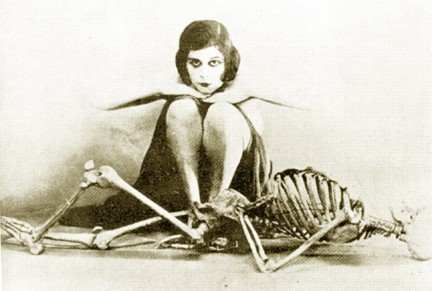
Tuesday, April 11, 2006
Avril, j'écris ton nom!
Mon ami du loin (who I'm trying hard not to call Madame Defarge) felt inspired to create a bit of concrete poetry:
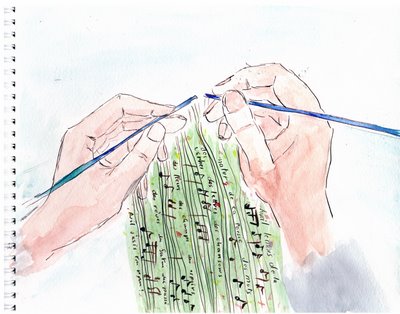
"Avril, le mois de la nature, de la poésie, des mots, des verbes, des fleurs des champs, des espoirs, des rêves du futur et du passe...Avril, j'écris ton nom!"
(April, month of nature, of poetry, of words, of verbs (actions), of flowers in the fields, of hopes, of dreams of the future and the past...April, I write your name!)
Mon ami du loin (who I'm trying hard not to call Madame Defarge) felt inspired to create a bit of concrete poetry:

"Avril, le mois de la nature, de la poésie, des mots, des verbes, des fleurs des champs, des espoirs, des rêves du futur et du passe...Avril, j'écris ton nom!"
(April, month of nature, of poetry, of words, of verbs (actions), of flowers in the fields, of hopes, of dreams of the future and the past...April, I write your name!)
Monday, April 10, 2006
Silly Little Moth.
Harry paid a visit this morning and left me with this gem that he heard on the David Lee Roth show:
Silly little moth:
Drawn into the flame for warmth,
Stupid idiot.
It really captures the feeling of coming into work on a Monday morning, now, doesn't it?
Harry paid a visit this morning and left me with this gem that he heard on the David Lee Roth show:
Silly little moth:
Drawn into the flame for warmth,
Stupid idiot.
It really captures the feeling of coming into work on a Monday morning, now, doesn't it?
Sunday, April 09, 2006
Purple Cows (and Pink Elephants?)
I never saw a purple cow,
I never hope to see one;
But I can tell you, anyhow,
I'd rather see than be one!
-Gellett Burgess, 1895
Apparently he regretted penning those lines, as can be seen in this followup:
Ah yes, I wrote The Purple Cow,
I'm sorry now I wrote it;
But I can tell you, anyhow,
I'll kill you if you quote it!
My dad tells me that Burgess and his friends were quite the pranksters. One incident in San Francisco apparently caused him to lose his job:
"He would lose his job, shortly, when he and some of his fellow members of
the writing circle known as Les Jeunes would commit an outrageous act of
prankersterism. Cogswell, a noted teototaller, had given the City of San
Francisco several statues of himself holding a glass of water. A concealed
pipe kept the glass filled. Burgess and his confederates altered one of
these monuments in a way which no biographer has found fit to describe."
-Thanks, Dad, for remembering this one!
I never saw a purple cow,
I never hope to see one;
But I can tell you, anyhow,
I'd rather see than be one!
-Gellett Burgess, 1895
Apparently he regretted penning those lines, as can be seen in this followup:
Ah yes, I wrote The Purple Cow,
I'm sorry now I wrote it;
But I can tell you, anyhow,
I'll kill you if you quote it!
My dad tells me that Burgess and his friends were quite the pranksters. One incident in San Francisco apparently caused him to lose his job:
"He would lose his job, shortly, when he and some of his fellow members of
the writing circle known as Les Jeunes would commit an outrageous act of
prankersterism. Cogswell, a noted teototaller, had given the City of San
Francisco several statues of himself holding a glass of water. A concealed
pipe kept the glass filled. Burgess and his confederates altered one of
these monuments in a way which no biographer has found fit to describe."
-Thanks, Dad, for remembering this one!
Subscribe to:
Posts (Atom)